Why x402 changes agent commerce
The current model for AI agent infrastructure relies on human-mediated friction. Agents need access to data and tools, but traditional API gateways require human accounts, credit card onboarding, and monthly subscriptions. This creates a bottleneck for autonomous workflows, where an agent might need to call a dozen different APIs to complete a single task. Forcing an agent to pause and wait for human payment approval defeats the purpose of automation.
x402 solves this by introducing a protocol for internet-native, machine-to-machine payments. Instead of a user managing a subscription, the agent itself holds a wallet and pays per request using stablecoins. This removes the need for user accounts entirely. The agent negotiates the price, pays the fee, and receives the response in a single, atomic transaction.
This shift transforms APIs from static endpoints into dynamic marketplaces. An agent can now dynamically route requests to the most cost-effective provider in real-time. It turns every API endpoint into a potential revenue stream that scales with usage, rather than requiring manual sales cycles for each new user. This is the foundation for true agent commerce, where value exchange happens at the speed of thought.
How x402 endpoints structure payments
x402 transforms standard HTTP servers into payment-gated services. Instead of relying on traditional credit card processors or complex API keys, the protocol uses the HTTP 402 status code to signal that a payment is required before granting access to data. This approach is particularly effective for x402 endpoints for chain analytics APIs, where real-time blockchain data must be monetized efficiently without friction.
The architecture rests on three core components: the 402 response format, facilitators, and the gating mechanism. When a client requests data, the server evaluates the request against predefined payment rules. If the payment is missing or invalid, the server returns a 402 response containing a Pay header. This header specifies the exact payment requirements, including the cryptocurrency, amount, and the destination address or smart contract.
The 402 response format
The 402 response is the primary communication channel between the server and the client. It does not merely reject the request; it provides the necessary instructions to complete the transaction. The Pay header includes a JSON object that details the payment terms. This allows automated agents, such as AI bots, to parse the requirements and execute the payment programmatically. This standardization ensures that any client compliant with the x402 specification can interact with any server, creating a universal payment layer for APIs.
Facilitators and settlement
Facilitators act as intermediaries that streamline the payment process. They handle the complexity of blockchain interactions, such as gas fees and transaction confirmation, allowing the API provider to focus on data delivery. When a client pays, the facilitator verifies the transaction on-chain and notifies the server. This verification is critical for chain analytics, where data freshness and integrity are paramount. The server only releases the data after the facilitator confirms the payment has been settled.
Gating chain analytics data
Gating data with x402 ensures that only paying users can access sensitive or high-value chain analytics. This mechanism prevents unauthorized scraping and ensures that API providers are compensated for their computational resources. By tying access directly to payment, the protocol creates a transparent and auditable transaction history. This is especially useful for real-time data feeds, where the value of the information is directly proportional to its immediacy and accuracy.
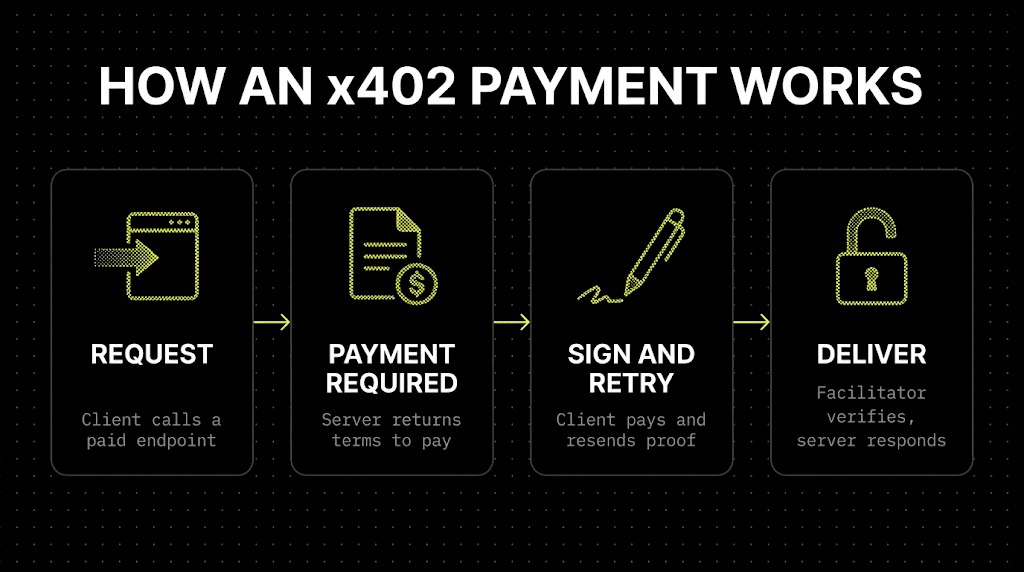
Technical Chart: x402 Payment Flow
Integrating Chain Analytics with x402
Turning raw chain data into a revenue stream requires more than just exposing an endpoint; it demands a payment-gated workflow that validates payment before delivering sensitive intelligence. By integrating chain analytics with x402, you transform public data feeds—such as token safety checks or whale alerts—into secure, monetizable services for AI agents and enterprise clients.
The integration process bridges your existing analytics logic with the x402 facilitator. This setup ensures that only clients who have settled the required fee (typically in USDC) receive the API response. Below is the workflow for connecting your Node.js or Python analytics service to the protocol.
Before routing analytics data, you must initialize the x402 facilitator. This middleware handles the cryptographic verification of payments on-chain. For Node.js environments, install the official facilitator package and configure it with your wallet private key and the target chain ID. This step creates the bridge between your HTTP server and the blockchain settlement layer.
Modify your existing analytics API routes to include a payment verification middleware. Instead of immediately querying the blockchain for token safety or whale movements, the middleware intercepts the request. It checks if the incoming HTTP headers contain a valid x402 payment proof. If the proof is missing or invalid, the server returns a 402 Payment Required error without executing the expensive analytics logic.
Chain analytics APIs often have varying computational costs. A simple token safety check is cheap, while real-time whale tracking across multiple chains is resource-intensive. Define distinct x402 payment requirements for each endpoint. For example, charge a lower USDC amount for basic safety scores and a higher premium for live transaction monitoring. This tiered approach allows AI agents to pay only for the depth of data they require.
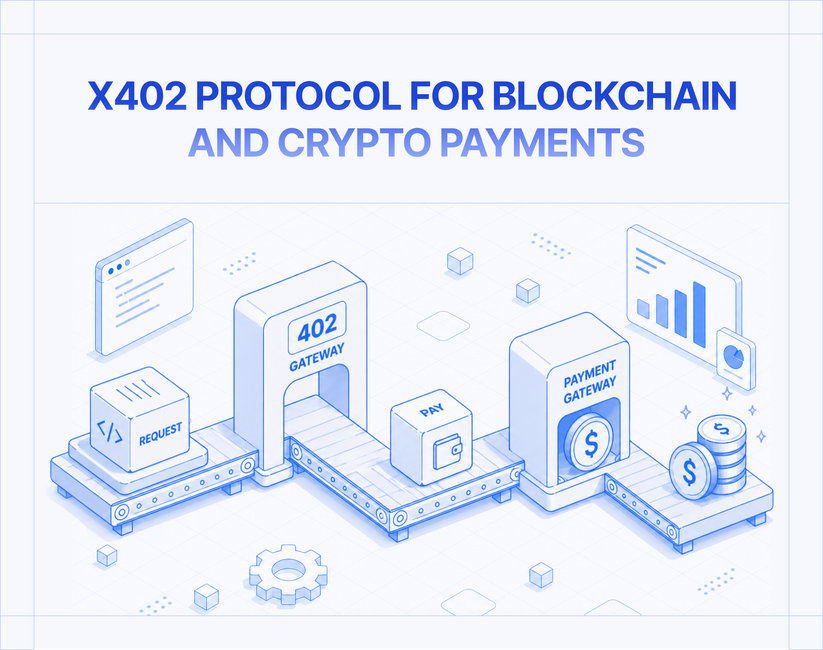
Ensure your API responses are structured to be easily parsed by autonomous agents. When the payment is verified, return the analytics data in a clean JSON format. Include metadata about the data freshness and the specific wallet addresses or tokens analyzed. This enables AI agents to automatically trigger your API as part of their broader trading or risk management strategies, creating a seamless loop of payment and intelligence.
Finally, implement logging for all payment verifications. Track which agents are paying, how much they are paying, and which analytics queries are most popular. This data is crucial for optimizing your pricing models and ensuring your analytics infrastructure can handle the load from automated commerce. Use this insight to refine your API's performance and reliability.
By following these steps, you create a robust pipeline where data access is strictly tied to payment. This model not only monetizes your analytics capabilities but also reduces server costs by filtering out unpaid requests before they consume computational resources.
Monetization models for analytics data
Pricing your x402 endpoints requires aligning cost with the value of the data. Chain analytics range from simple balance checks to complex whale movement tracking. Your pricing strategy should reflect the computational cost and the rarity of the insight.
Per-call pricing
Charge a fixed micro-fee for each request. This model works best for high-volume, low-complexity data like token balances or simple block numbers. It is predictable for developers and scales naturally with usage. OpenPulsechain uses this approach for its 28 x402 endpoints, charging per query for token safety scores and whale alerts.
Tiered access
Structure costs by data depth or query complexity. A basic tier might offer standard block data, while a premium tier unlocks historical whale movements or real-time opportunity signals. This allows you to capture value from both casual users and serious analytics firms without overcharging for simple requests.
Subscription-equivalent models
Some agents benefit from predictable monthly costs rather than per-call fees. You can simulate this by offering a "flat rate" access to a specific dataset for a fixed period. This encourages deeper integration into agent workflows, as developers can budget for data costs more easily.
| Feature | Per-call | Tiered | Subscription |
|---|---|---|---|
| Cost Structure | Pay per request | Volume-based discounts | Fixed monthly fee |
| Best For | Low-volume, sporadic queries | Growing agents with steady usage | High-volume, critical data feeds |
| Predictability | Low | Medium | High |
| Complexity | Low | Medium | High |
| Model | Cost Driver | Best Fit |
|---|---|---|
| Per-call | Request volume | Sporadic queries |
| Tiered | Data depth | Growing agents |
| Subscription | Time period | Critical feeds |
Common integration mistakes to avoid
Implementing x402 endpoints requires precision. One misconfigured header or delayed verification step can break the entire agent commerce loop. These mistakes are not just bugs; they are revenue leaks.
Race conditions in payment verification
The most frequent technical pitfall is a race condition between payment detection and response delivery. If your endpoint processes the request before the blockchain confirms the transaction, you risk processing unpaid requests or double-counting payments. Always implement a robust polling mechanism or use a reliable indexer to verify transaction finality before returning data. Do not rely on immediate mempool inclusion as proof of payment.
Incorrect facilitator routing
Routing errors occur when your API gateway fails to correctly identify the payment facilitator. x402 relies on specific headers and routing rules to ensure payments reach the right wallet or service. Misconfigured routing leads to lost funds and broken agent workflows. Ensure your middleware strictly validates the Authorization header and routes requests to the correct internal handlers based on the facilitator’s signature. A single misrouted request can cause a cascade of failures across your agent network.
Ignoring idempotency
Agents may retry requests due to network latency or timeout errors. Without idempotency keys, your API might charge the user multiple times for the same data fetch. Always implement unique request IDs and check for duplicates before processing. This protects both the user and your revenue stream from accidental overcharging.
Checklist for launching x402 endpoints
Before exposing your chain analytics APIs to agent commerce, run through this pre-launch list to ensure security and monetization work as intended.
- Verify x402 Compliance: Ensure your server correctly parses the
x-paytokenheader and returns a402 Payment Requiredstatus when payment is missing or invalid. Reference the Bitquery x402 Data API guide for implementation specifics. - Define Payment Logic: Set clear rules for token acceptance (e.g., ETH, USDC) and pricing models (pay-per-call or subscription). Ensure your endpoint rejects requests that don't meet the minimum payment threshold.
- Secure Your Keys: Never expose private keys in client-side code. Use server-side verification to confirm transactions on-chain before granting access to sensitive analytics data.
- Test with Real Agents: Use AI agent frameworks that support x402 to simulate real-world usage. This helps identify edge cases in payment handling and error responses.
No comments yet. Be the first to share your thoughts!