Why x402 changes API monetization
Traditional API billing relies on monthly subscriptions or tiered usage plans. This model works for human developers who can estimate traffic, but it breaks down for AI agents. Agents operate at machine speed and volume, making per-call micropayments the only logical economic model. However, current infrastructure lacks the frictionless payment rails to support this at scale.
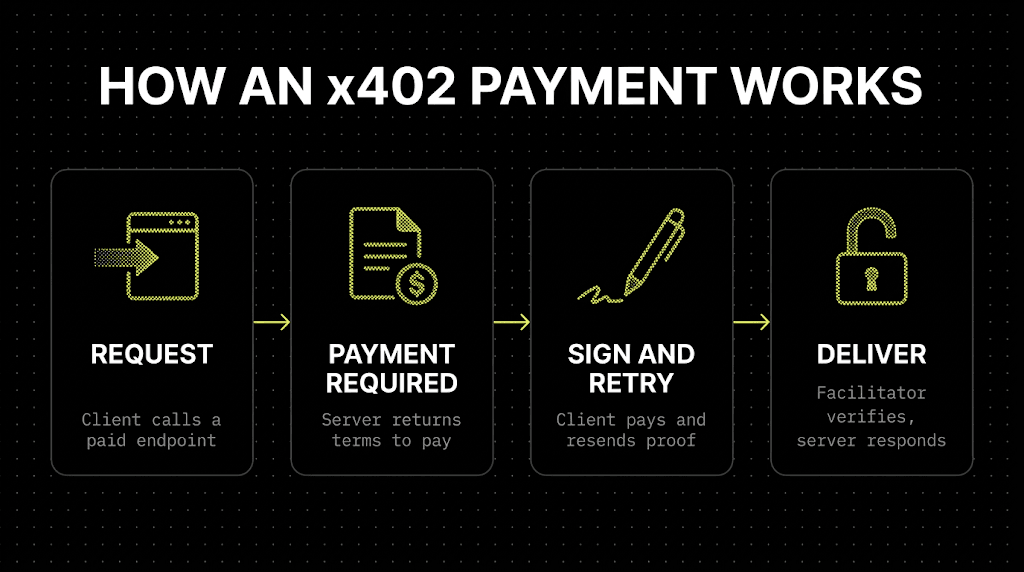
x402 solves this by embedding payment logic directly into the HTTP protocol. Instead of managing API keys, invoices, and payment gateways, an endpoint can return a 402 Payment Required status code with a payment instruction. The client—often an AI agent—pays the required amount in stablecoins and immediately retries the request. This creates a direct, accountless transaction between the agent and the service provider.
For chain analytics APIs, this shift is transformative. It allows for granular monetization where every data query is paid for individually. There is no need for upfront commitment or credit card processing. The payment happens in the same request cycle as the data retrieval, ensuring immediate settlement and reducing churn risk.
By leveraging stablecoins, x402 avoids the volatility and settlement delays associated with traditional cryptocurrencies. The result is a system that feels like a simple API call to the developer, but functions as a decentralized marketplace underneath. This aligns perfectly with the high-frequency, low-latency needs of modern chain analytics.
How the 402 response works
The x402 protocol relies on a straightforward HTTP mechanism: the server returns a 402 Payment Required status code. Unlike standard error codes like 401 (Unauthorized) or 403 (Forbidden), 402 explicitly signals that access is restricted pending payment. This status code was originally defined in HTTP/1.1 for future payment systems and has now found its primary use case in crypto-native API integrations.
When an API client, such agent or a standard HTTP client, requests a protected endpoint without attaching a valid payment token, the x402-compliant server intercepts the request. Instead of simply rejecting it, the server responds with the 402 status and includes specific payment instructions in the response body or headers. These instructions typically detail the required cryptocurrency, the wallet address or smart contract, the exact amount, and the payment method (e.g., a stablecoin like USDC).
This design allows for a seamless "pay-to-retry" workflow. The client receives the 402 response, processes the payment using the provided instructions, and then retries the original request with proof of payment attached. This eliminates the need for complex authentication flows or pre-funded API keys for many use cases, particularly for AI agents that need to pay for data in real-time. The entire exchange remains native to HTTP, meaning no custom protocols are required for the initial interaction.
Build a paid analytics endpoint
Wrapping existing chain data APIs with x402 facilitators turns free endpoints into revenue streams. The goal is simple: intercept the request, verify the payment, and return the data. We use Thirdweb's x402 facilitator as the bridge between your HTTP server and the blockchain.
This approach works for any API, from block explorers to custom analytics dashboards. The facilitator handles the heavy lifting of verifying USDC transfers, so you can focus on your data logic.

Start by installing the Thirdweb SDK. Initialize the facilitator with your contract address and the token you want to accept (usually USDC). This creates the middleware function that will sit between the client and your API logic.
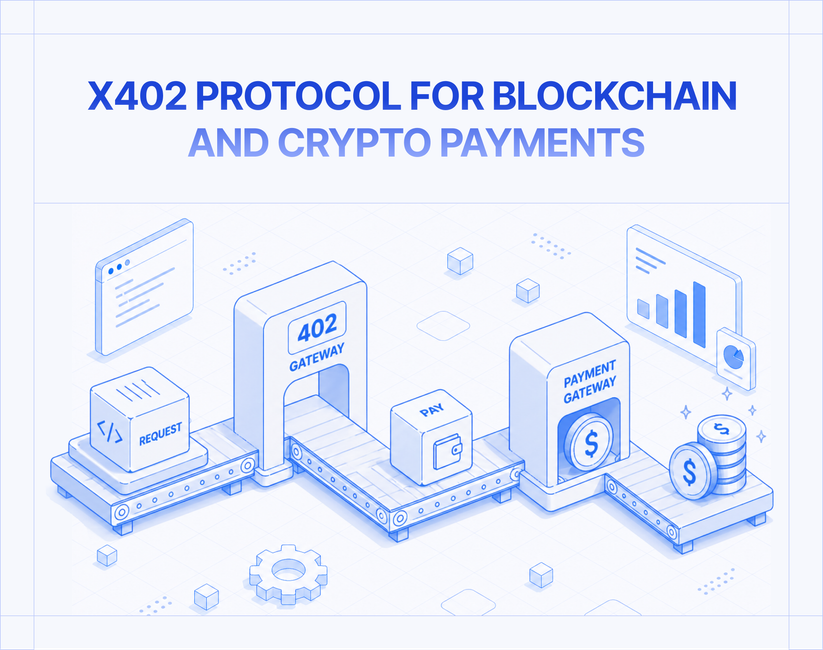
Create a wrapper function for your API route. Inside, call the facilitator's verifyPayment method. This method checks if the incoming request includes a valid x402 payment header. If the payment is missing or invalid, the facilitator returns a 402 error immediately.
Once the payment is verified, proceed with your standard analytics logic. Fetch the chain data, process it, and return the JSON response. Because the facilitator only intercepts if payment fails, your existing code remains largely untouched.
Use a testnet to verify the flow. Send a small amount of USDC from a test wallet to your contract. Then, make an API request with the generated payment header. Ensure the facilitator correctly recognizes the transaction and allows access to your analytics data.
Stablecoins like USDC provide predictable pricing for your API. This matters for analytics services where data volume can vary wildly. A fixed price in stablecoins protects your revenue from crypto market volatility, ensuring consistent earnings per query.
Real-world chain data use cases
Chain analytics APIs power everything from transaction monitoring to high-frequency RPC calls. When these endpoints use x402 micropayments, they shift from static, pre-paid access to a pay-per-request model. This change is particularly useful for AI agents and automated systems that need to query blockchain data frequently but unpredictably.
Transaction monitoring and server activity
Bitquery’s x402 endpoints allow developers to access payment transactions and monitor server activity in real-time. Instead of maintaining a persistent subscription, your system pays only when it queries the data. This reduces overhead for applications that don’t need constant, high-volume access but still require reliable, verified on-chain data.
Instant blockchain access for AI agents
Quicknode now supports x402 pay-per-request access across 130+ blockchains. This gives AI agents wallet-authenticated access to RPC endpoints without the friction of traditional API key management or credit card billing. Agents can execute transactions or fetch state data directly, paying only for the requests they actually make.
Comparison: Traditional billing vs. x402 micropayments
The shift to micropayments changes how you budget for chain data. Traditional models often require upfront commitments or flat fees, while x402 aligns cost directly with usage. This is especially beneficial for variable workloads where demand spikes and drops unpredictably.
| Feature | Traditional API Billing | x402 Micropayments |
|---|---|---|
| Payment Model | Pre-paid credits or monthly subscription | Per-request micropayment |
| Access Control | API key or OAuth token | Wallet-authenticated |
| Cost Efficiency | Fixed cost regardless of usage | Pay only for what you use |
| AI Agent Integration | Requires manual top-ups or billing updates | Automatic, seamless payment on request |
Common integration pitfalls
Implementing x402 endpoints requires precision. The protocol is straightforward, but small deviations in wallet authentication or payload formatting often break the entire flow. Developers frequently stumble on these technical details, leading to failed transactions and frustrated users.
Incorrect wallet authentication
The most common error is misconfiguring the wallet signature. x402 relies on specific cryptographic proofs to verify payment intent. If the wallet address doesn't match the signed payload, the server rejects the request immediately. Ensure your implementation strictly follows the official agentwallet-sdk documentation for signature generation.
Payload formatting errors
HTTP headers and body structures must align with the x402 specification. A missing content-type header or an incorrectly serialized JSON body will cause the endpoint to fail. Always validate your payload against the schema before sending. Use a linter or automated test suite to catch formatting issues early in the development cycle.
Ignoring 402 response codes
Developers sometimes treat the 402 status code as an error rather than a payment prompt. The protocol expects clients to handle 402 responses by initiating a payment flow. Failing to implement this logic results in broken user experiences. Design your client-side logic to gracefully handle and respond to these specific HTTP codes.
Next steps for API providers
Ready to launch? Implementing x402 endpoints requires a structured approach to ensure your API can handle micropayments from AI agents and clients reliably. Follow this sequence to move from setup to production.
Select a payment facilitator that supports your target chain. Most providers offer SDKs or middleware to simplify the integration of x402 compliance into your existing API stack.
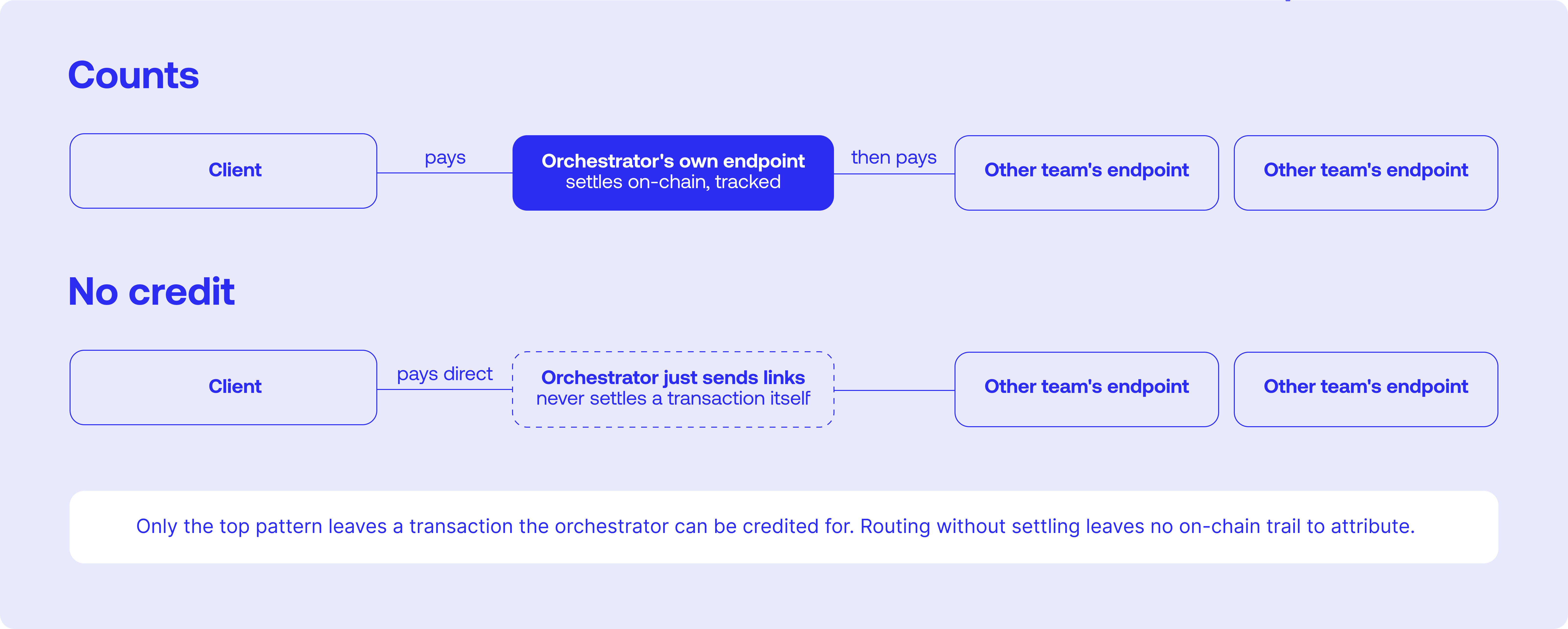
Set clear price-per-call or subscription rates. Ensure your pricing logic is transparent and machine-readable, allowing agents to calculate costs before making requests.
Update your API endpoints to return 402 Payment Required when no payment is present. Once payment is verified, return 200 OK with the requested data. Refer to the official quickstart for seller integration details here.
Use a testnet environment and an AI agent wallet to simulate real-world transactions. Verify that the payment flow triggers correctly and that your API responds with the expected data after payment.
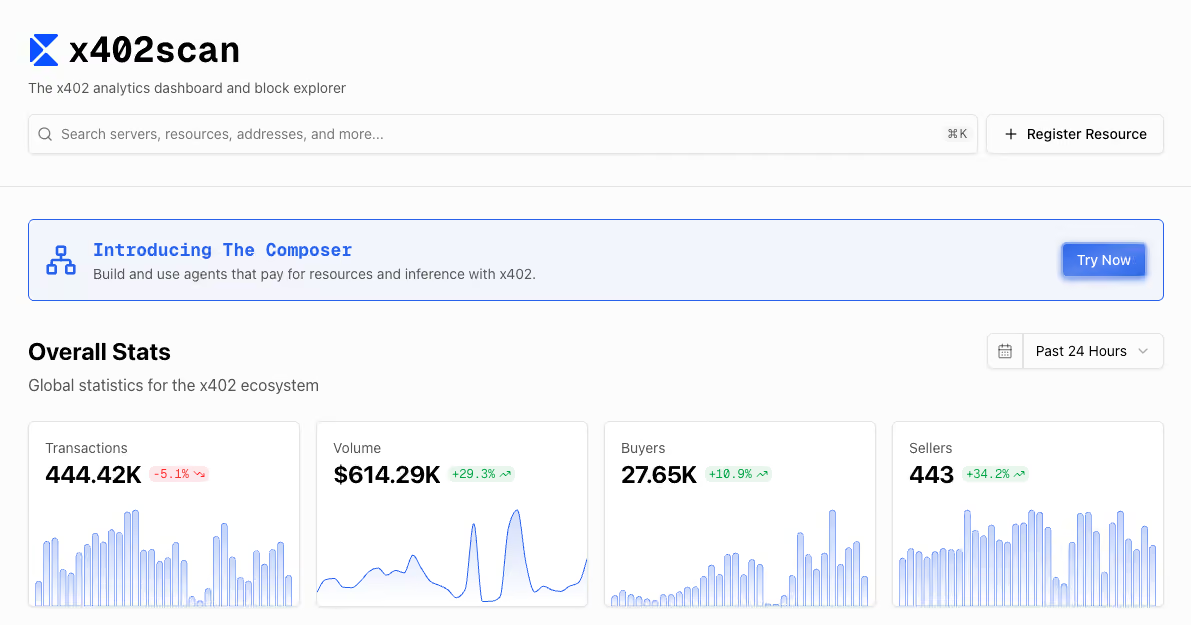
Track transaction success rates and latency. Adjust your gas limits or facilitator settings to ensure smooth operations under load.
No comments yet. Be the first to share your thoughts!