Why x402 matters for agent commerce
x402 is redefining how AI agents access chain analytics APIs by embedding payments directly into the HTTP protocol. Instead of relying on traditional API keys or complex OAuth flows, x402 uses the standard 402 Payment Required HTTP status code to gate access. This allows software to transact in stablecoins like USDC without human intervention, creating a seamless path for autonomous agent commerce. By leveraging this standard, developers can build endpoints that are both secure and financially self-sustaining.
For chain analytics providers, this shift means moving from manual billing cycles to instant, per-request settlements. When an agent queries a blockchain dataset, the API responds with a 402 status and a payment request if the balance is insufficient. Once the stablecoin payment is confirmed on-chain, the agent receives the data. This eliminates the friction of account creation and credit checks, enabling micro-transactions that were previously too costly to process.
The integration of x402 endpoints for chain analytics APIs supports a new model of data monetization. Providers can offer granular access to historical on-chain data, real-time token balances, or smart contract events, charging only for what is used. This precision pricing aligns costs with value, making it economically viable to serve the high-frequency, low-latency demands of AI-driven market analysis.
Current x402 endpoint implementations
The x402 protocol is moving from prototype to production infrastructure, with several major data providers already shipping endpoints that allow AI agents to pay for chain analytics directly. These implementations prove that microtransaction-based access is viable for high-frequency data queries.
Bitquery has integrated x402 into its data API layer, enabling real-time payment monitoring and server activity analysis. Their implementation removes the need for pre-funded API keys, allowing agents to execute queries and settle payments in a single interaction. This is particularly useful for analytics workflows that require unpredictable, bursty data access patterns.
The Graph Network offers x402 subgraph endpoints on Base mainnet and Sepolia testnet. By enabling USDC payments directly on-chain, The Graph allows agents to query indexed blockchain data without maintaining persistent accounts or session tokens. This stateless approach simplifies the integration for autonomous agents that need to scale query volumes without managing fiat invoicing.
CoinGecko and Circle have also released x402-compatible endpoints, focusing on pay-per-use crypto data and agent storefronts. These implementations demonstrate that even well-established data aggregators are adapting to an agent-first economy where payment and access are unified.
The following table compares the key providers based on their current x402 capabilities and supported chains.
| Provider | Supported Chains | Data Type | Setup Requirement |
|---|---|---|---|
| Bitquery | Multi-chain | Payment & Server Analytics | Gateway Integration |
| The Graph | Base (Mainnet & Sepolia) | Subgraph Indexing | None (On-chain) |
| CoinGecko | Multi-chain | Crypto Market Data | None (On-chain) |
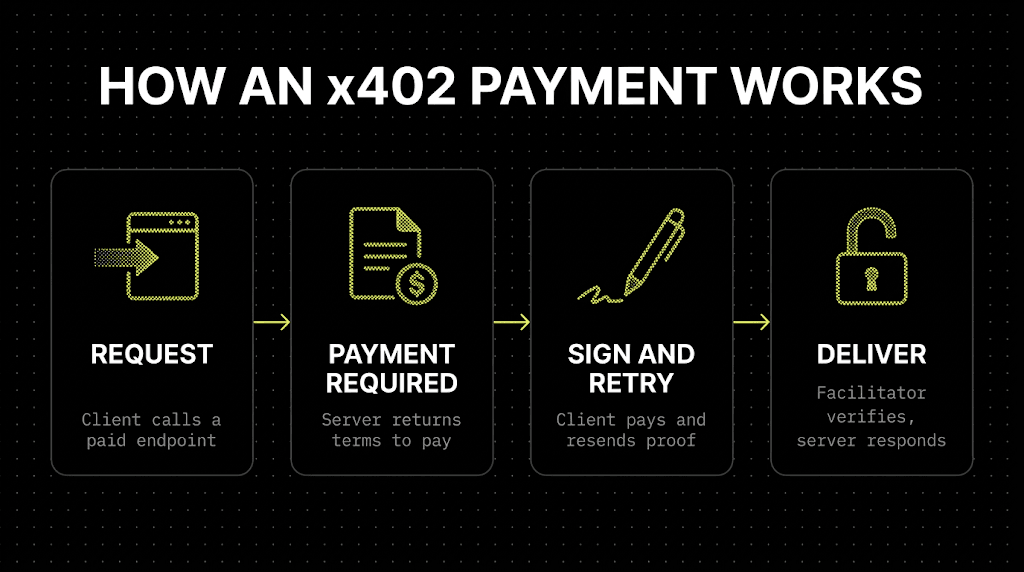
These examples highlight a clear shift in how chain analytics APIs are being accessed. The removal of account management and API keys reduces friction for AI agents, making x402 endpoints a practical choice for scalable, autonomous data retrieval.
Infrastructure for Scaling x402 Endpoints
To handle high-volume agent requests, you need a stack that minimizes friction between the HTTP layer and the blockchain. The core challenge with x402 Endpoints for Chain Analytics APIs is managing the latency of on-chain settlements without blocking the API response. If your infrastructure stalls while waiting for a confirmation, your agents will timeout, and your analytics data will go unpaid.
Facilitators and Wallet Management
Thirdweb’s x402 facilitator is the standard for routing these payments. It acts as the middleware that intercepts the 402 Payment Required response and handles the USDC transfer. For scaling, you should batch these facilitator calls. Instead of triggering a new transaction for every single analytics query, group requests into batches. This reduces the gas overhead significantly, which is critical when processing thousands of agent calls per minute.
Wallet management is the next bottleneck. You cannot rely on a single hot wallet for high-throughput analytics. Distribute your receiving wallets across multiple addresses to avoid hitting transaction limits on chains like Base or Ethereum L2s. Use a hierarchy of wallets where a primary aggregator collects funds from multiple sub-wallets. This ensures that your API remains available even if one wallet hits its daily limit.
Latency and Cost Context
Stablecoin payments are fast, but network congestion can still introduce delays. Monitor the gas trends on your target chain to adjust your batching strategy. When gas spikes, increase your batch size to amortize the cost. Conversely, when the network is idle, you can process smaller batches for faster finality.
The cost of these transactions is directly tied to the price of the underlying asset and network fees. Use a live price widget to track USDC stability and ensure your pricing models for analytics data remain viable. If USDC depegs or gas fees spike, your infrastructure costs per query will change instantly.
Design for autonomous agent workflows
AI agents don't read documentation; they parse JSON. To scale x402 endpoints for chain analytics APIs, you must structure responses so autonomous agents can automatically detect payment requirements, execute transactions, and handle retries without human intervention.
Always return a 402 Payment Required status when the agent hasn't paid. Include the x-pay-url header pointing to your facilitator endpoint and the x-pay-amount in a supported currency like USDC. Agents use these headers to identify that a payment is needed before attempting to fetch the data.
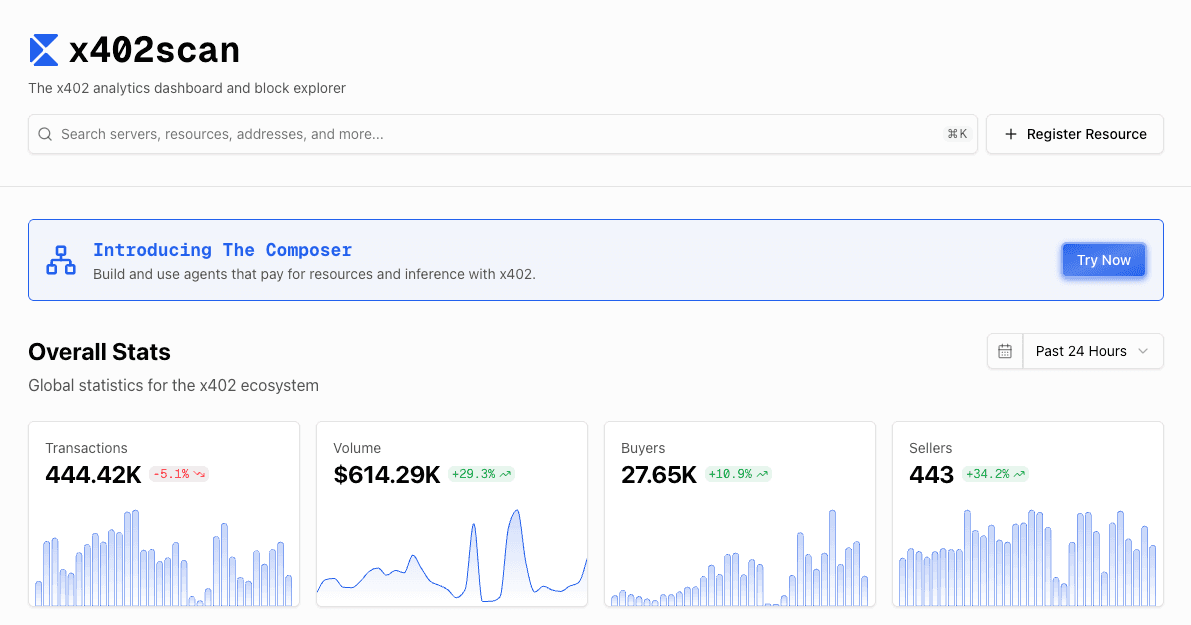
When an agent fails to pay or sends an invalid transaction, return a 400 or 422 error with a clear JSON body. Include the x-pay-url again so the agent can retry the payment flow immediately. Avoid generic error messages; agents need specific fields to distinguish between network timeouts and failed transactions.
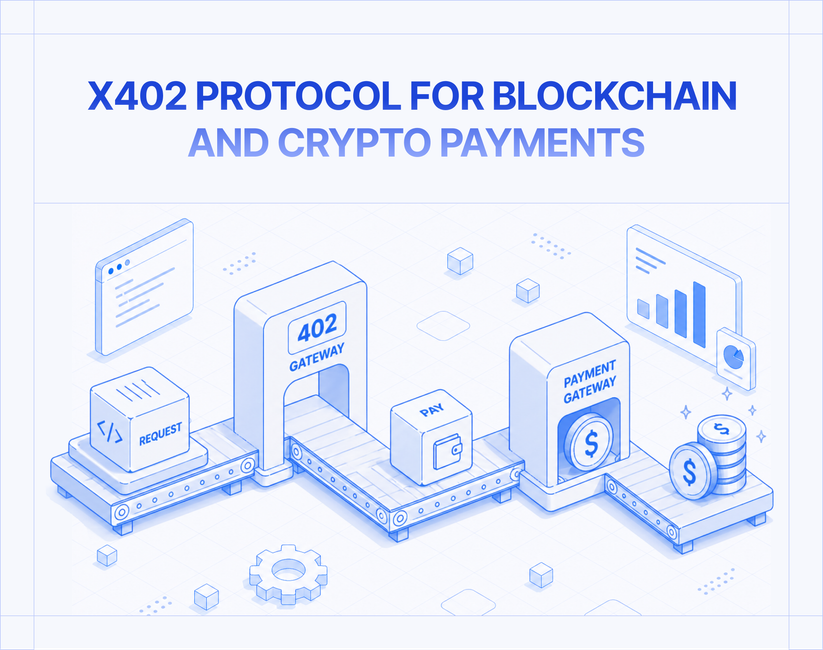
Agents may retry requests if they experience network latency. Ensure your endpoint checks the blockchain for the transaction before returning data. If the payment is confirmed, return the data immediately. If not, return the 402 response again. This prevents double-charging and ensures the agent receives the correct data on the first successful payment.
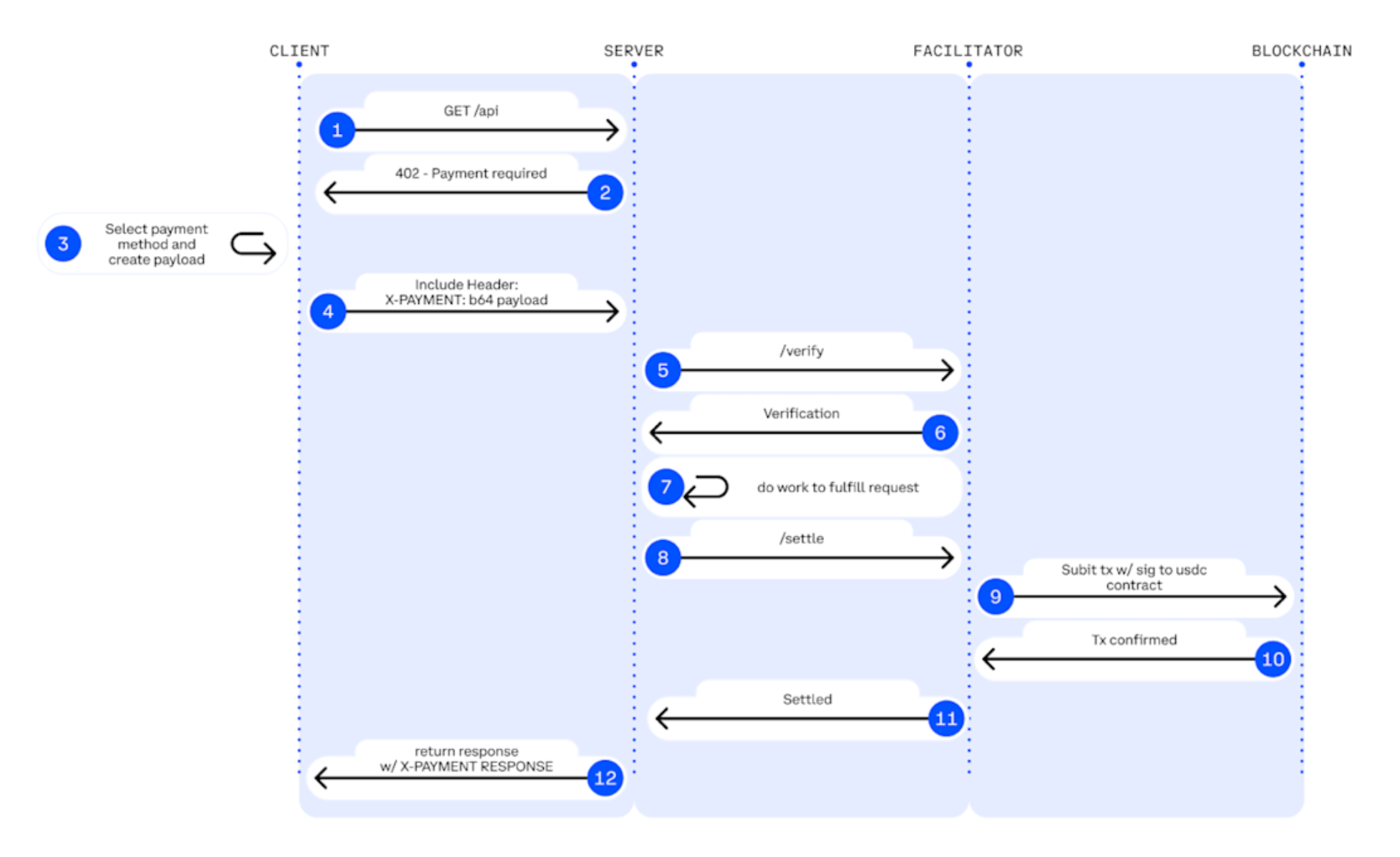
Create dedicated endpoints for agent workflows, such as POST /research/company-brief. Structure these like standard REST endpoints but ensure they are optimized for machine-to-machine interaction. Circle recommends starting with one seller endpoint to test the flow before scaling to more complex analytics queries.
Common pitfalls in x402 integration
Scaling x402 endpoints for chain analytics APIs requires more than just standard API security. When you move from simple data queries to agent commerce, the protocol layer adds significant complexity. Developers often underestimate how easily gas estimation errors or facilitator downtime can break the entire payment flow. These aren't just minor bugs; they are revenue leaks that stop AI agents from paying your API.
Gas estimation blind spots
The most common trap occurs when your node returns a x-payment-required header with an incorrect gas estimate. If the estimated gas is too low, the agent's transaction will fail, and your API returns an error without payment. Worse, if you overestimate, you charge the agent unfairly, which breaks trust in your service. Always use the eth_estimateGas RPC call dynamically against the latest block data rather than hardcoding values. Hardcoded estimates become stale as network congestion fluctuates, leading to failed transactions or overcharging.
Facilitator dependency risks
Relying on a single third-party facilitator creates a single point of failure. If the facilitator goes down or experiences high latency, your payment-gated API becomes inaccessible. This is particularly dangerous for high-frequency analytics endpoints where millisecond delays matter. To mitigate this, implement a fallback mechanism or use a redundant facilitator setup. Do not assume the facilitator will always be available. Your endpoint should gracefully handle facilitator timeouts by returning a clear error code, allowing the agent to retry or switch providers.
Missing error context
When a payment fails, your API must return a clear, actionable error. Vague error messages like "Payment failed" force agents to retry blindly, wasting gas and time. Instead, return specific HTTP status codes and detailed error messages that explain whether the issue was insufficient funds, gas estimation error, or facilitator downtime. This clarity helps agents self-heal and reduces support tickets. For chain analytics APIs, where data accuracy is paramount, clear error communication ensures that the payment layer doesn't obscure the data layer's reliability.
Frequently asked questions about x402
Which blockchains support x402 endpoints for chain analytics?
x402 is designed as a cross-chain standard, but current analytics implementations are concentrated on high-throughput networks. The Graph Network, for example, currently supports x402 payments for subgraph data specifically on Base (mainnet) and Base Sepolia (testnet). Other providers like Bitquery integrate x402 for data API access, allowing developers to query payment transactions and monitor server activity in real-time across supported ecosystems.
Do I need an API key to access x402 data endpoints?
No. The primary advantage of x402 is that it removes traditional authentication barriers. As highlighted in The Graph's documentation, x402 subgraph endpoints enable USDC payments without requiring API keys, accounts, or sessions. The payment is embedded directly in the request, granting immediate access to the data once the transaction is confirmed.
How do I monitor x402 payments for analytics?
To analyze payment analytics, you can use specialized x402 data APIs that track payment transactions and server activity. These tools allow you to monitor real-time usage and revenue. For instance, Bitquery provides comprehensive guides on accessing payment transaction data, enabling you to build dashboards that reflect actual usage of your x402 endpoints rather than just theoretical traffic.
No comments yet. Be the first to share your thoughts!