How x402 changes API access
The x402 protocol rewrites the rules for machine-to-machine commerce by replacing API keys with HTTP 402 status codes and stablecoin payments. This shift enables frictionless agent-to-agent interaction, allowing AI systems to pay for data or compute without human intervention or account creation.
Traditionally, accessing an API required generating a secret key, managing subscription tiers, and handling complex authentication headers. x402 simplifies this by embedding the payment logic directly into the HTTP response. When an agent requests an endpoint, the server responds with a 402 Payment Required status code if payment is pending, rather than a 401 Unauthorized error.
This mechanism turns every API endpoint into a potential point of sale. Agents can settle micropayments in real-time using stablecoins, removing the friction of credit card processing or wallet approvals. The result is a standardized, internet-native payment layer designed specifically for the scale and speed of AI agent economies.
For developers building chain analytics APIs, this means a new architecture where access control and billing are unified. The protocol ensures that payment verification happens at the network level, reducing the attack surface associated with key management and subscription fraud.
Key chain analytics endpoints
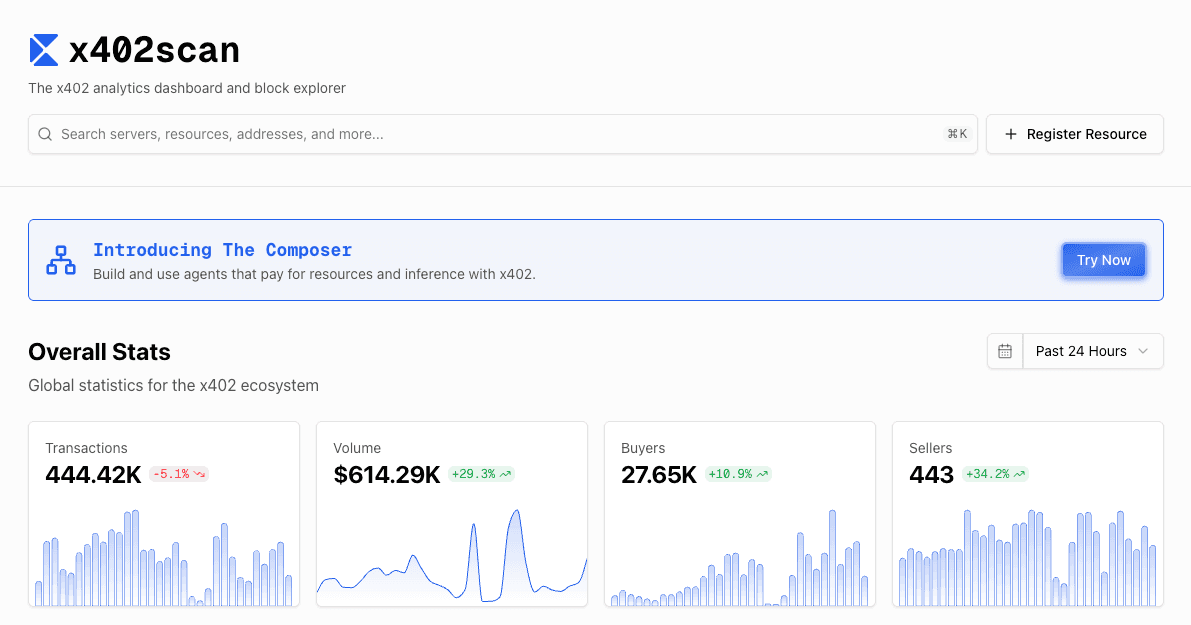
The x402 protocol removes the friction of API keys and account management for AI agents. Instead of managing subscriptions, agents pay directly with crypto at the point of use. This section examines the most prominent chain analytics endpoints currently leveraging this standard, highlighting how each provider structures access for automated systems.
Bitquery: Real-Time Payment Monitoring
Bitquery offers a robust x402 implementation focused on transaction-level data. Their endpoints allow agents to access payment transactions, monitor server activity in real-time, and analyze payment analytics without pre-existing credentials. This is particularly useful for agents that need to verify on-chain events as they happen, such as confirming a deposit before processing an order. The documentation provides clear examples of how to structure these requests for immediate execution.
The Graph: Subgraph Access on Base
The Graph Network has integrated x402 into its subgraph endpoints, enabling seamless data retrieval for decentralized applications. Agents can query historical and real-time blockchain data by paying with USDC on Base mainnet or Base Sepolia testnet. This approach eliminates the need for API keys or session management, allowing agents to fetch specific subgraph data on demand. The integration is designed to be lightweight, making it ideal for high-frequency data polling by autonomous agents.
CoinGecko: Native Crypto Payments for Market Data
CoinGecko’s x402 integration brings one of the most widely used crypto data APIs into the pay-per-use model. Agents can access price feeds, market caps, and trading volumes by paying directly with supported cryptocurrencies. There are no API keys or accounts required, which simplifies the integration process for agents that need to fetch market data dynamically. This endpoint is particularly valuable for agents that trade or analyze market trends, as it provides reliable data without the overhead of traditional API management.
Comparison of x402 Analytics Endpoints
The following table compares the key features of these endpoints, including supported chains and payment currencies, to help you choose the right tool for your agent’s needs.
| Provider | Data Type | Supported Chains | Payment Currency |
|---|---|---|---|
| Bitquery | Transaction & Server Activity | Multi-chain | Native Crypto |
| The Graph | Subgraph Queries | Base | USDC |
| CoinGecko | Market Data & Prices | Multi-chain | Native Crypto |
x402 Protocol Overview
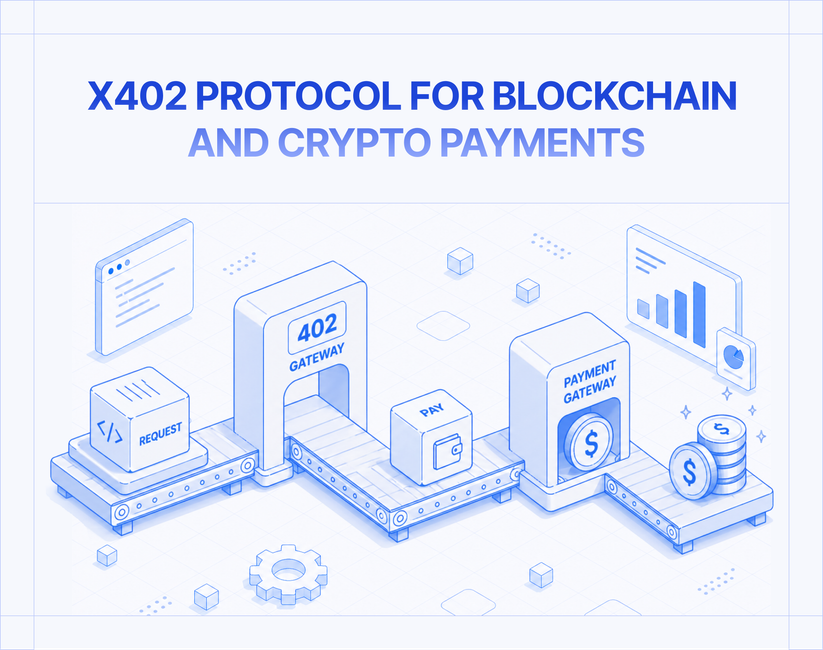
The x402 protocol enables direct, on-chain payments for API access, streamlining the interaction between AI agents and data providers. This model removes the need for traditional authentication methods, allowing agents to pay for data in real-time.
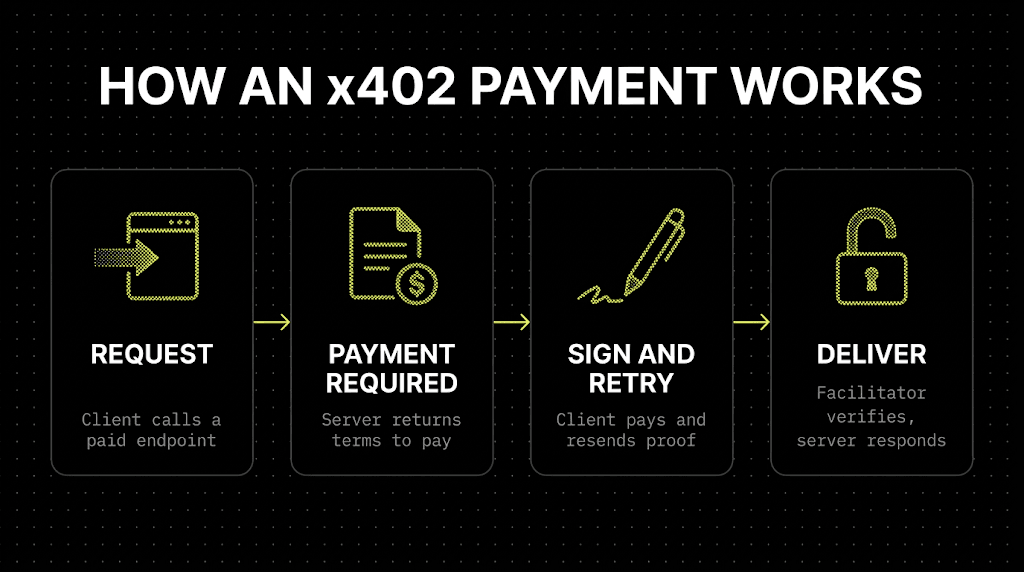
Build the seller flow
Implementing x402 turns your API into a storefront for AI agents. The seller flow handles the heavy lifting: receiving payments via USDC, verifying the transaction on-chain, and unlocking data access. You don't need to build a payment gateway from scratch; you only need to integrate a facilitator that manages the escrow and verification logic.
Start by installing the x402 facilitator CLI. This tool generates the necessary configuration files and scaffolds a basic seller endpoint. It connects your local development environment to the blockchain network, ensuring your API can communicate with the payment layer.
You need a dedicated seller wallet to receive USDC payments. Fund this wallet with a small amount of the native gas token (like ETH or MATIC) to cover transaction fees, and add USDC for the initial escrow balance. The facilitator uses this wallet to hold payments until the API call is verified.
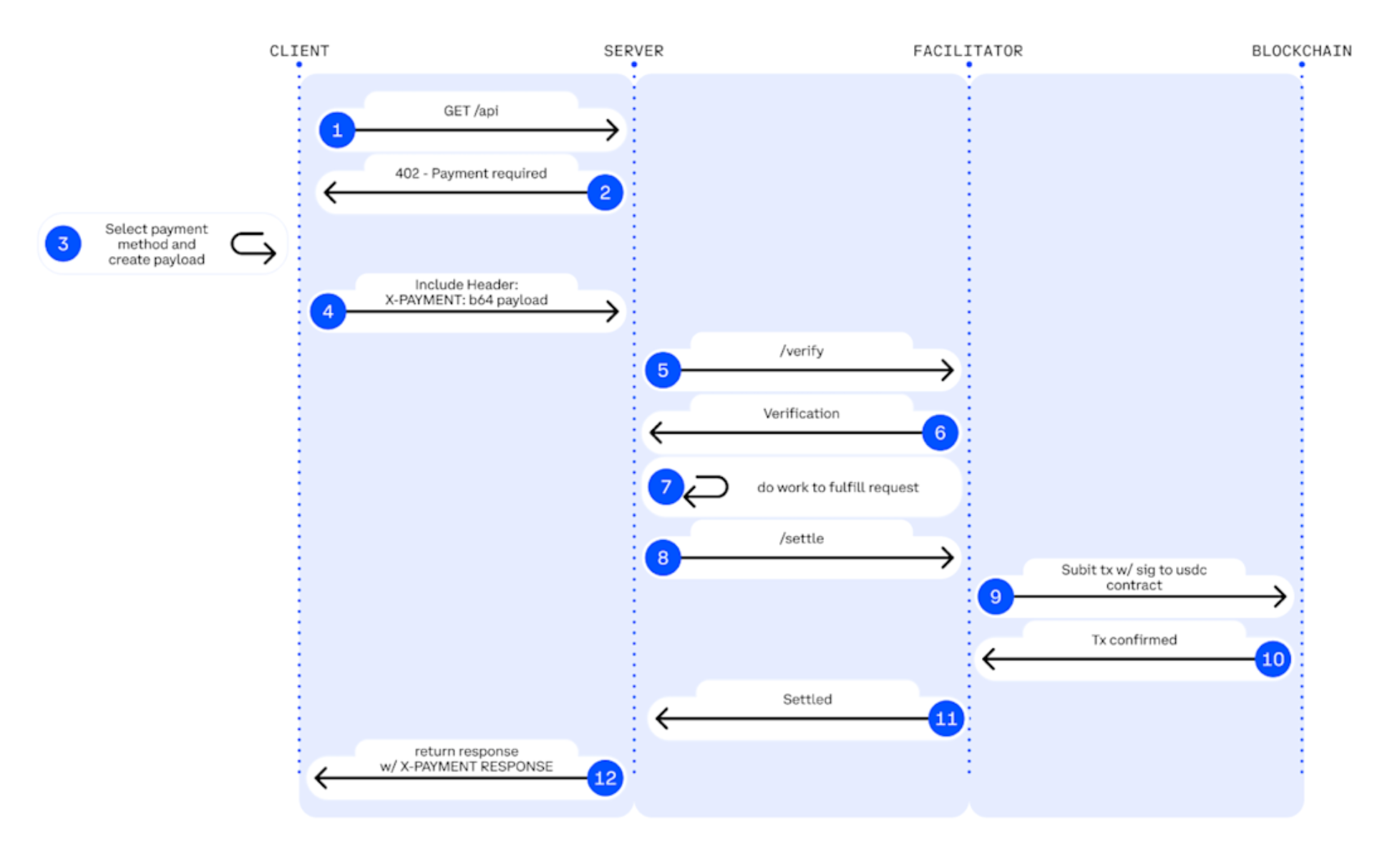
Build an Express or Next.js endpoint that acts as the x402 seller. When a request arrives, the facilitator intercepts it, checks for a valid payment proof in the headers, and verifies the transaction on-chain. If the payment is confirmed, the route returns the requested data; otherwise, it returns a 402 error.
Use the CLI to simulate an agent payment. Send a test request with a valid payment header to your local endpoint. Monitor the logs to ensure the facilitator correctly validates the on-chain transaction and unlocks the data. This step confirms your seller flow is ready for production.
Once the endpoint is live, you can withdraw accumulated USDC from the facilitator's escrow to your main treasury wallet. The facilitator handles the distribution automatically, deducting any small protocol fees before sending the net revenue to your designated address.
How x402 Reshapes Agent Commerce
The x402 protocol is shifting how AI agents interact with digital services. By embedding payment logic directly into HTTP responses, it allows agents to pay per request using stablecoins without human approval. This eliminates the friction of traditional billing cycles and account setups, turning every API call into a potential transaction.
This shift creates new monetization models for data providers. Instead of relying on subscriptions or one-time purchases, sellers can offer granular access to their endpoints. As Circle notes, this approach lets developers "turn your API into a storefront for agents," enabling microtransactions that were previously too costly to process.
For the broader market, this means a shift toward utility-based pricing. Agents can now consume data on demand, paying only for the specific insights they need. This reduces waste for buyers and opens up new revenue streams for sellers who can scale micro-fulfillment efficiently.
To understand the economic stability driving these transactions, it helps to look at the underlying asset. Most x402 implementations rely on stablecoins like USDC to avoid volatility during micro-transactions.
The stability of USDC against the dollar is critical for this model. If the payment currency fluctuates, the cost of agent services becomes unpredictable, undermining the trust required for automated commerce. Keeping the payment layer stable ensures that the value exchanged remains consistent for both buyer and seller.
No comments yet. Be the first to share your thoughts!