Why x402 fits chain analytics
Chain analytics APIs have long suffered from a friction problem: developers and AI agents must manage accounts, rotate API keys, and handle separate billing cycles before they can access the data they need. This administrative overhead is a bottleneck for automated workflows. x402 solves this by turning the API endpoint itself into a payment gateway. It is an HTTP 402-compatible standard that allows an AI agent to pay for a resource, like a blockchain query, at the very moment it is requested. The standard removes the need for pre-existing accounts or subscription management, enabling instant, machine-to-machine commerce.
For chain analytics, this shift is transformative because data access is often sporadic and high-volume. An agent monitoring a specific wallet address might only need a burst of historical data at a precise moment. With x402, the agent simply sends the payment in the HTTP request header and receives the JSON response immediately. There is no handshake, no OAuth flow, and no waiting for invoice approval. The protocol handles the chain-agnostic choreography, ensuring the payment is verified before the data is released. This aligns perfectly with the agent-commerce era, where speed and autonomy are paramount.
The technical elegance of x402 lies in its compatibility with existing infrastructure. It does not require a complete rewrite of your API; it simply adds a layer of payment verification to standard HTTP responses. This means you can monetize your existing chain analytics endpoints without building a custom billing dashboard. The standard supports various blockchain networks, making it versatile for cross-chain data providers. By adopting x402, you are not just adding a payment method; you are enabling a new class of automated, data-driven applications that can operate without human intervention.
Setting up the payment middleware
You need a way to intercept incoming requests and verify that a payment has cleared before your analytics data leaves the server. This section walks through the practical steps to integrate x402 into an Express.js backend, ensuring your API acts as a proper gatekeeper for paid data.

Start by adding the official x402 SDK to your project. This package provides the core utilities for parsing payments and interacting with the blockchain. Run npm install @x402/sdk in your server directory to bring in the necessary modules.
Create a middleware function that sits between your routing logic and your data handlers. This function will inspect the Authorization header of every incoming request. If the header is missing or malformed, the middleware should immediately return a 402 Payment Required response, stopping the request before it hits your database queries.
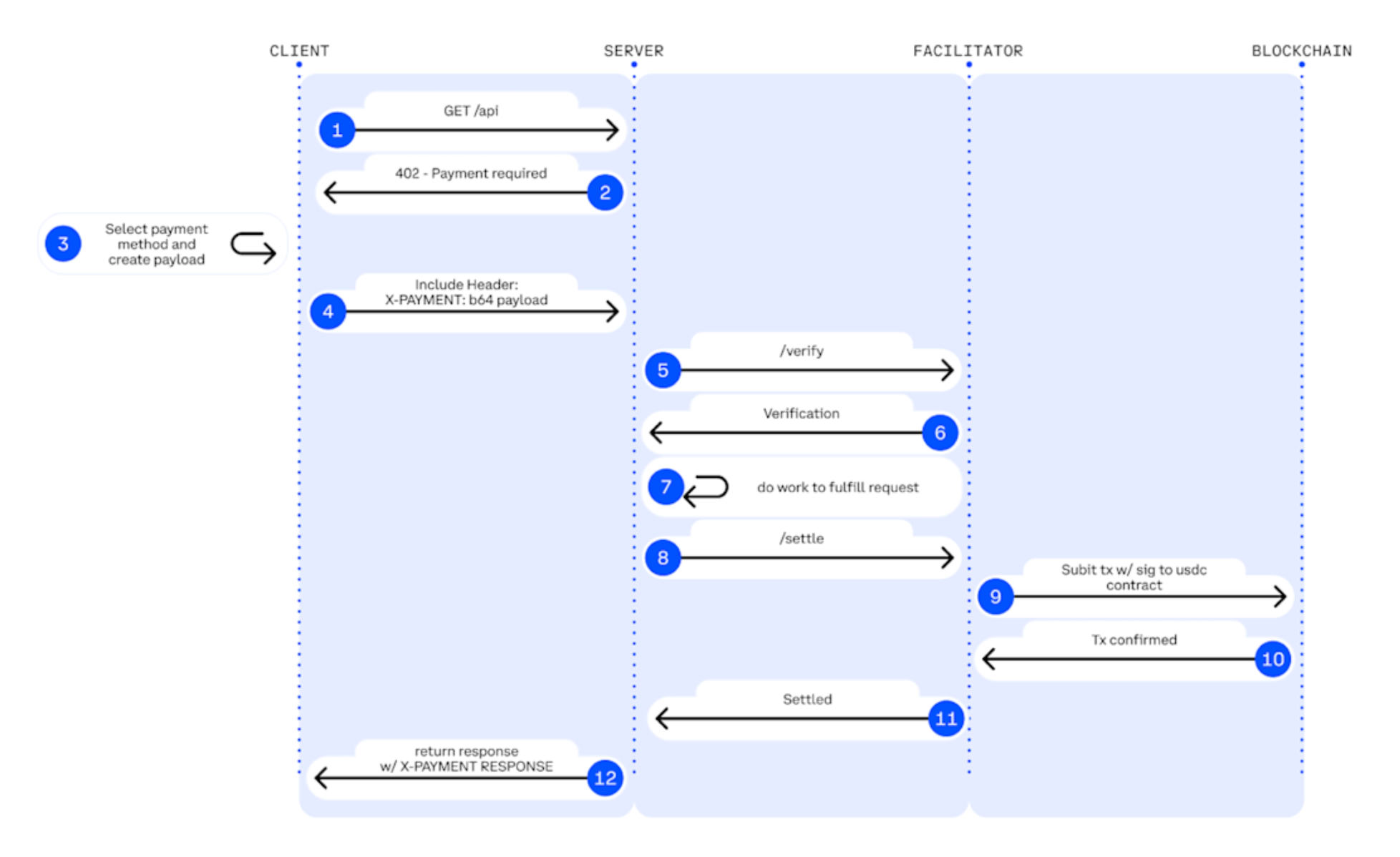
The middleware must validate the provided payment token against the blockchain. Use the SDK to check if the transaction is confirmed and if the amount matches your pricing tier. Reference the official Quickstart for Sellers for the exact verification syntax. This step prevents unauthorized access and ensures you are only serving data to paid clients.
Once payment is verified, attach the payer’s wallet address or user ID to the request object. This allows your downstream analytics logic to track usage, enforce rate limits, or personalize data responses based on the paying customer’s account. This context is essential for accurate billing and audit trails.
Blockchain confirmations can take time. Implement logic to handle transient errors or pending transactions gracefully. If a payment is still pending, you might choose to return a 202 Accepted status with a message indicating the data is being prepared, rather than failing outright. This improves the user experience for buyers and agents interacting with your API.
Once your middleware is in place, your API will only serve data after payment verification. This setup ensures that your chain analytics are monetized correctly, turning every request into a potential revenue stream.
Structuring endpoints for agents
Designing API endpoints for AI agents requires a shift from human-centric documentation to machine-readable precision. Agents don't browse; they parse. To ensure your chain analytics data is discoverable and consumable, you must prioritize metadata and standardized response formats over complex authentication flows.
Prioritize discoverability and metadata
AI agents rely on structured metadata to identify relevant endpoints. Include clear descriptions of what data each endpoint returns, such as transaction histories or wallet balances, in your API documentation. Use OpenAPI specifications to define these endpoints explicitly, allowing agents to programmatically discover capabilities without human intervention.
Simplify authentication with x402
Traditional API keys create friction for autonomous agents. Instead, structure your endpoints to accept x402-compliant crypto payments directly. This approach removes the need for account creation or key management, enabling agents to consume data on a pay-per-use basis. As demonstrated by CoinGecko's x402 integration, native crypto payments streamline access without sacrificing security.
Standardize response formats
Consistency is critical for agent reliability. Return data in predictable JSON structures with clear error codes. Avoid nested, ambiguous responses that require complex parsing logic. For instance, BitQuery's x402 data APIs provide real-time payment analytics in a format that agents can immediately ingest and process.
Compare authentication models
The table below contrasts traditional API key authentication with x402 payment flows, highlighting the operational differences for agent consumption.
| Feature | Traditional API Key | x402 Payment Flow |
|---|---|---|
| Setup | Requires account creation | No account needed |
| Authentication | API key in header | Crypto payment token |
| Billing | Monthly subscription | Pay-per-use |
| Agent Compatibility | Low (manual key management) | High (autonomous) |
By focusing on these structural elements, you create endpoints that are not just accessible, but truly usable by autonomous AI agents.
Handling payment verification errors
Payment verification is the bridge between a request and a response. When that bridge breaks, your API returns nothing but noise. In an x402 flow, the buyer (or their AI agent) sends a signed transaction. Your server must validate that signature, check the blockchain, and confirm the funds reached your wallet. If any step fails, the transaction is invalid.
The most common pitfall is treating a failed verification as a generic server error. A 500 Internal Server Error tells the client to retry immediately, which floods your logs and wastes gas fees if the underlying issue is on-chain. Instead, distinguish between transient network issues and permanent validation failures. If the blockchain is congested, return a 502 Bad Gateway or a specific retry-after header. If the signature is malformed, return a 400 Bad Request with a clear message like "Invalid x402 signature." This clarity helps developers debug their integration without guessing.
Another frequent error is timing out while waiting for block confirmations. On Solana, finality is fast, but not instant. If your verifier waits too long for a transaction to be included in a block, you risk timing out the client. Set a reasonable timeout window, but ensure you are checking the correct state. Don't just check if the transaction exists; verify it is confirmed and that the recipient address matches your API's wallet.
Finally, never expose raw blockchain errors to the end user. A raw error message about a failed transaction can reveal your wallet address or internal logic. Wrap these errors in a standardized response format. This keeps your API secure and professional, ensuring that even when things go wrong, the client knows exactly how to proceed.
Track revenue and usage patterns
Once your x402 endpoint is live, the real work begins: understanding who pays and how much. You aren't just running code; you are operating a micro-payment business. To keep it profitable, you need to monitor transactions in real-time and analyze the resulting data.
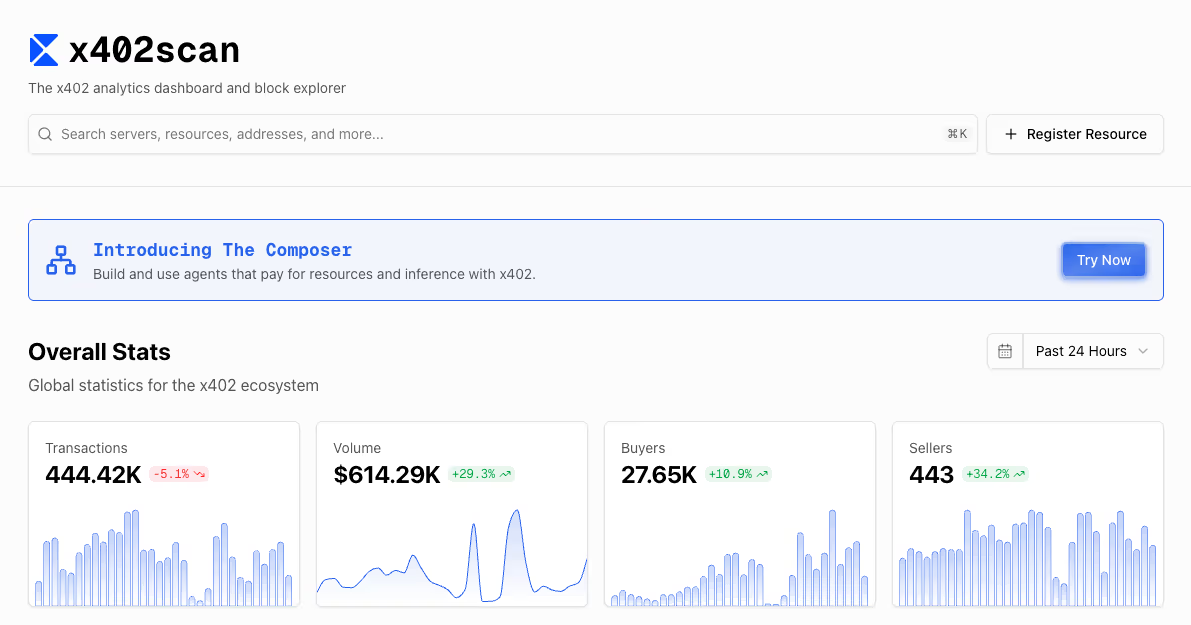
Bitquery’s x402 Data API provides the backbone for this visibility. It allows you to access payment transactions directly, giving you a clear view of your revenue streams. Instead of guessing which features drive income, you can see exactly which API calls generate payments.
Monitor server activity to spot usage spikes or drops. This data helps you optimize pricing and identify high-value users. Without this visibility, you are flying blind. Use the analytics to refine your offerings and ensure your monetization strategy actually works.
Pre-launch checklist for x402 endpoints
Before you open your chain analytics API to agents, run through these final verification steps. This ensures your x402 integration handles payments gracefully and doesn't leave developers stranded with broken requests.
1. Verify Payment Middleware
Ensure your server correctly intercepts x-pay headers and validates signatures. Test with a small amount of ETH to confirm the endpoint responds with 402 Payment Required when headers are missing or invalid, and processes the request successfully when valid. Check the x402 Quickstart for reference implementations.
2. Document Payment Requirements
Agents need clear instructions on how to pay. Document the exact Content-Type (usually application/json), the expected x-pay header format, and any required metadata in your API docs. Include a sample curl command showing a successful payment request.
3. Test Edge Cases
Simulate network failures, invalid signatures, and insufficient funds. Ensure your API returns consistent error codes (e.g., 401 Unauthorized for bad signatures, 402 Payment Required for missing payments) so agents can handle errors predictably.
4. Monitor Transaction Confirmations
Implement a listener for blockchain confirmations. Your API should only serve data after the payment transaction is confirmed on-chain (or within your chosen trust model). Test this by simulating a payment and verifying the data isn't served until confirmation is detected.
5. Set Up Logging and Alerts
Log all payment attempts, successes, and failures. Set up alerts for unusual patterns, such as a sudden spike in 402 responses or failed signature validations. This helps you detect potential abuse or integration issues early.
No comments yet. Be the first to share your thoughts!