How x402 powers agent commerce
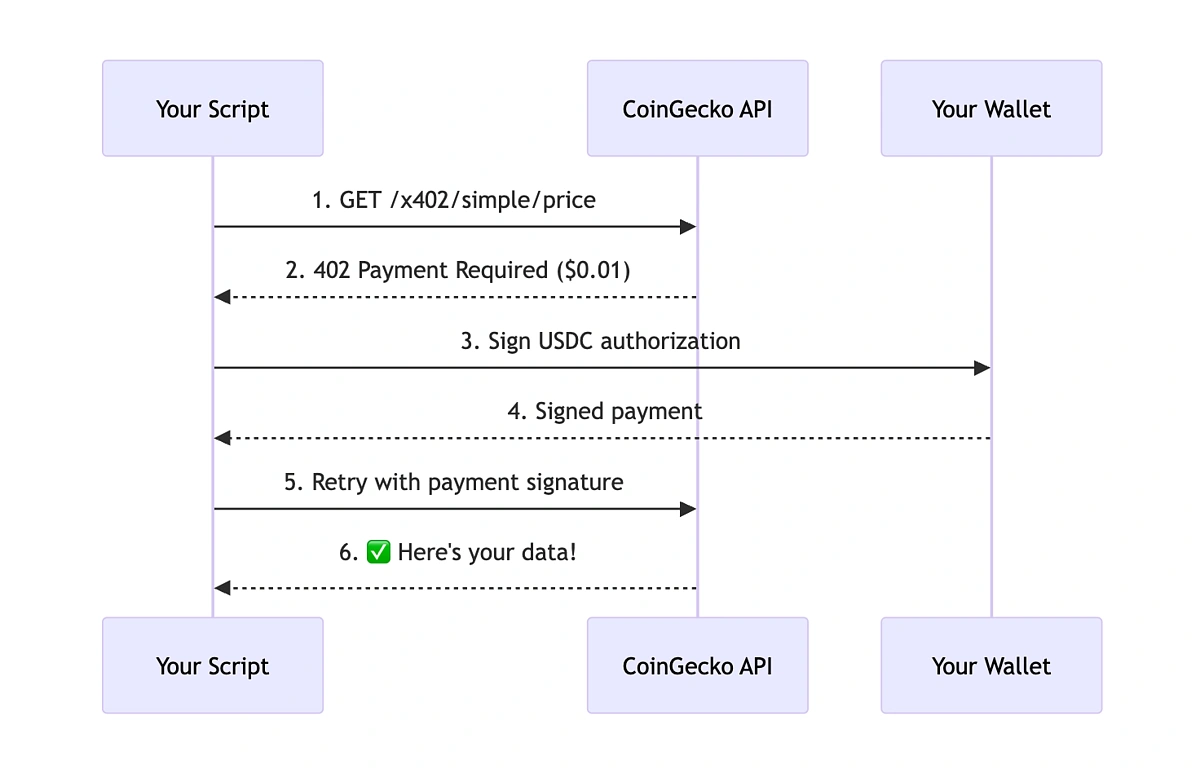
x402 is an HTTP-native payment protocol designed specifically for machine-to-machine interaction. It allows AI agents to pay for API requests using stablecoins without requiring user accounts or human approval. This standard leverages the existing HTTP 402 Payment Required response code to gate access, turning any digital service into a paid resource that operates seamlessly within the request flow [1].
For chain analytics, this means data becomes a direct, monetizable asset. An agent can query a service like Bitquery for real-time on-chain metrics—such as token transfers, smart contract interactions, or wallet balances—and receive the data immediately upon payment. The protocol removes the friction of traditional billing cycles, enabling micro-transactions that make high-frequency data access economically viable for autonomous systems.
By integrating x402, analytics providers can offer granular, usage-based pricing for their data streams. This infrastructure supports the growing demand for verified blockchain data, where agents need reliable, real-time insights to execute trades or monitor compliance. The standard ensures that every query is settled instantly, creating a transparent and efficient market for decentralized information.
x402 turns an API or digital service into a paid resource. A buyer sees the price, pays, and gets access without leaving the request flow.
This approach shifts the paradigm from subscription-based access to pay-per-use utility. Agents can now fetch specific chain analytics data on demand, paying only for what they retrieve. This model aligns costs directly with value, making it easier for developers to build scalable, data-driven applications that interact with the blockchain in real time.
Key Takeaways
- x402 enables HTTP-native, machine-to-machine payments for API access.
- AI agents can pay for chain analytics data using stablecoins without human approval.
- The protocol supports micro-transactions, making high-frequency data access viable.
- Analytics providers can offer usage-based pricing for real-time blockchain insights.
Top chain analytics endpoints to monetize
Chain analytics APIs handle some of the most sensitive and valuable data in web3. Because this data powers high-stakes decisions for traders and developers, it is an ideal candidate for x402 monetization. Instead of relying on free tiers that throttle usage, you can build endpoints that require stablecoin payments for access. This approach turns raw blockchain data into a recurring revenue stream.
To understand the value, consider the data types that agents and dashboards constantly query. These are not simple status checks; they are complex, resource-intensive requests that would normally cost significant server time or API credits.

Block data and transaction history
Every time an agent needs to verify a transaction or check the latest block height, it is pulling from the core state of the chain. This data is foundational but expensive to index at scale. By wrapping these queries in x402, you ensure that every fetch is paid for, preventing resource exhaustion from automated scrapers.
Address history and portfolio tracking
Agents managing wallets need to pull complete transaction histories to calculate PnL or verify balances. These requests are heavy because they often require joining multiple tables across different blocks. A paid endpoint for address history ensures that only committed users can access this deep-dive data, keeping your infrastructure costs aligned with your revenue.
Contract events and logs
Smart contract interactions generate massive amounts of log data. Monitoring these events for specific conditions is critical for DeFi strategies and security audits. Since indexing these logs requires significant computational power, charging for access via x402 allows you to cover the cost of real-time event monitoring while providing a reliable data feed to paying clients.
Implementing the payment gateway
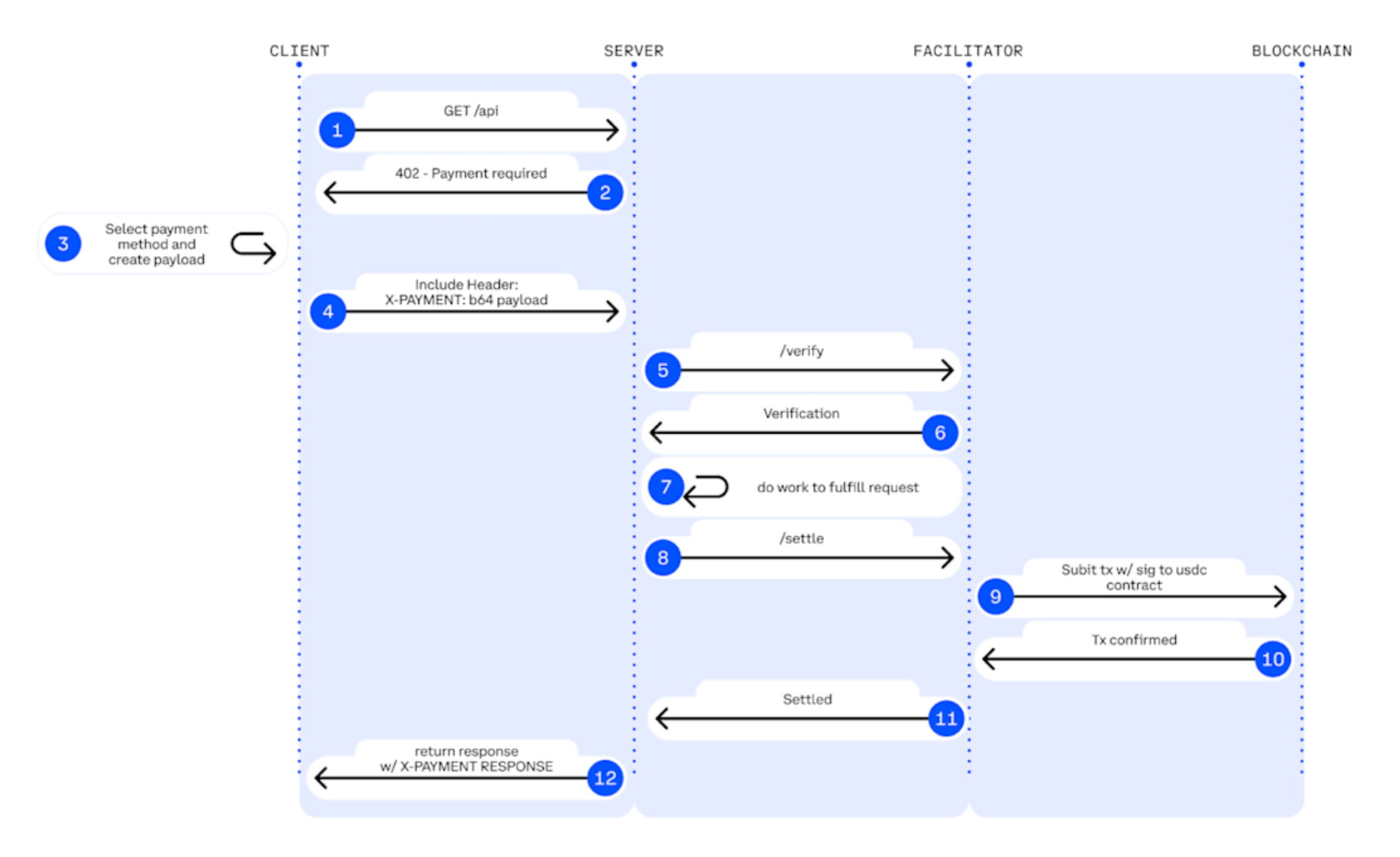
You don't need to build a custom payment processor from scratch. The x402 protocol relies on facilitators—middleware services that handle the transaction verification and data delivery handshake. For chain analytics APIs, this means your backend focuses on querying data (like token balances or transaction histories), while the facilitator handles the payment logic.
Think of the facilitator as the bouncer at a club. It checks the ID (payment proof) at the door. If the check is valid, it lets the guest (your data) through. If not, it blocks the request. This separation of concerns keeps your API clean and secure.
1. Choose Your Facilitator
The two primary options are Thirdweb and Coinbase Developer Platform (CDP). Both support USDC on Base, which is the standard for x402 due to its low fees and stability. Thirdweb offers a robust SDK that integrates well with Next.js, while Coinbase CDP provides a more direct path for enterprise-grade applications.
2. Set Up the Endpoint
Create a standard Express or Next.js API endpoint. Instead of just returning data, you configure it to use the x402 facilitator's SDK. This SDK intercepts the incoming request and checks for a valid payment proof in the headers. If the proof is missing or invalid, it returns a 402 Payment Required status code, which is the hallmark of x402.
3. Verify and Deliver
Once the facilitator confirms the payment, it passes the request to your data logic. For chain analytics, this might involve fetching real-time price data from Bitquery or historical wallet activity from a blockchain explorer. The facilitator ensures that only paying agents receive this data, creating a secure monetization layer without complex authentication flows.
Import the Thirdweb or Coinbase CDP SDK into your project. Configure it with your API keys and set the target chain to Base. This step establishes the connection between your server and the blockchain network.
Define your pricing model. You can set fixed fees for specific data points (e.g., $0.01 per wallet address lookup) or tiered access for bulk queries. The facilitator will automatically validate that the payment amount matches your defined rate.
Connect your facilitator to your chain analytics provider, such as Bitquery or DappLooker. When a payment is verified, your API fetches the requested data from these sources and returns it to the agent. This ensures that data access is strictly tied to successful payment.
4. Handle Errors and Edge Cases
Agents might send incomplete payment proofs or use unsupported tokens. Your facilitator should be configured to reject these gracefully. Return clear error messages so developers can debug their integration. Also, implement rate limiting to prevent abuse, ensuring that your analytics infrastructure remains stable under load.
5. Test with a Sandbox
Before going live, use the facilitator's sandbox environment. Thirdweb and Coinbase both offer testnets where you can simulate payments without spending real USDC. This allows you to verify that your data delivery logic triggers correctly upon payment confirmation.
Infrastructure tools for x402 APIs
Building an x402 endpoint requires more than just a payment handler; you need reliable data sources that your API can query and monetize. The infrastructure layer consists of specialized chain analytics providers that expose blockchain data through HTTP endpoints, allowing agents to pay for real-time insights.
Bitquery offers a comprehensive GraphQL interface for accessing payment transactions and monitoring server activity. Their x402 data APIs guide demonstrates how to analyze payment analytics in real-time, making it a strong candidate for agents that need to verify transaction states before unlocking content. Bitquery’s official documentation provides the technical depth required for precise implementation.
Crypto APIs focuses on the payment mechanics themselves, providing the standard 402 Payment Required response framework. Their platform simplifies the integration of stablecoin payments into existing HTTP APIs, allowing developers to monetize data access without building custom payment rails from scratch. This reduces the friction for agents that need to pay for API calls.
QuickNode provides the RPC infrastructure that often underpins these analytics. Their x402 Rails Integration guide shows how to add micropayments to Ruby on Rails APIs, while their Paywall Guide offers a walkthrough for implementing access controls. QuickNode’s reliability ensures that the blockchain data your API serves remains consistent and available.
| Provider | Primary Focus | Integration Style | Best For |
|---|---|---|---|
| Bitquery | Chain Analytics | GraphQL API | Real-time payment tracking |
| Crypto APIs | Payment Rails | HTTP 402 Response | Stablecoin monetization |
| QuickNode | RPC Infrastructure | Rails/HTTP Middleware | Reliable data access |
Best practices for agent monetization
Monetizing chain analytics endpoints requires more than just wrapping data in an x402-compliant API. You need to balance accessibility for AI agents with sustainable revenue for your infrastructure. The goal is to make paying for data as frictionless as fetching it, while ensuring your pricing model covers the cost of on-chain verification and API queries.
Chain analytics data, such as real-time token prices or historical transaction logs, has varying costs to serve. Circle’s approach to x402 monetization suggests starting with a single, well-defined seller endpoint. For example, you might charge a flat fee in USDC for a batch of 1,000 historical price queries, or use a tiered model where high-frequency agents pay more per request. Avoid overcomplicating the initial pricing; simple, transparent rates encourage adoption by autonomous agents.
AI agents can be aggressive. Without rate limiting, a single misconfigured agent could drain your API quota or trigger excessive on-chain transactions. Implement per-agent throttling based on their wallet address or API key. For instance, limit free-tier agents to 10 requests per minute, while premium agents paying in stablecoins get higher throughput. This ensures your infrastructure remains stable and your revenue stream is predictable.
Direct on-chain settlement can be slow and gas-intensive for small micropayments. Use a facilitator or gateway service, like the nanopayments seller quickstart mentioned by Circle, to handle the x402 payment verification. This abstraction allows agents to pay instantly without waiting for block confirmations. It also simplifies your backend, as you don’t need to build custom smart contract logic for every data type you expose.
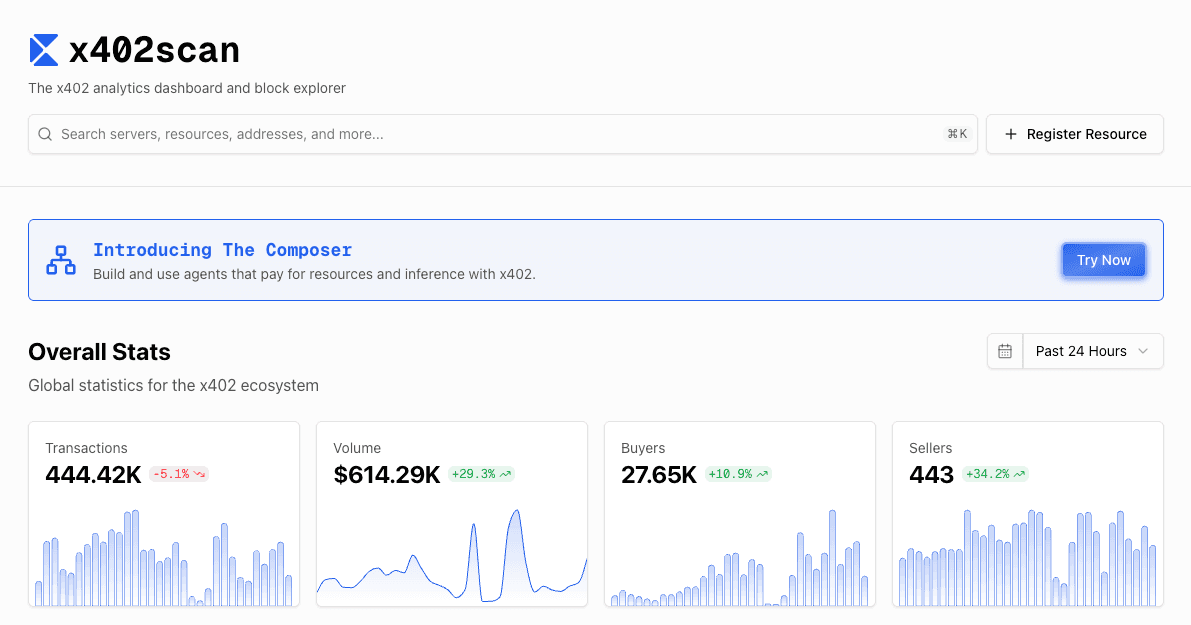
Track which data endpoints generate the most revenue and which ones are being abused. Use analytics to identify patterns: if agents are frequently requesting low-value data, consider raising the price or caching the results to reduce on-chain costs. Continuous optimization ensures your x402 endpoints remain profitable as agent usage scales.
By following these steps, you create a robust foundation for agent commerce. The key is to keep the payment flow invisible to the agent while ensuring you get paid for every useful query.
Helpful gear
Use these product recommendations as a starting point, then choose the size, material, and price point that fit how you actually use the gear.


As an Amazon Associate, we may earn from qualifying purchases.
No comments yet. Be the first to share your thoughts!