How x402 changes API billing
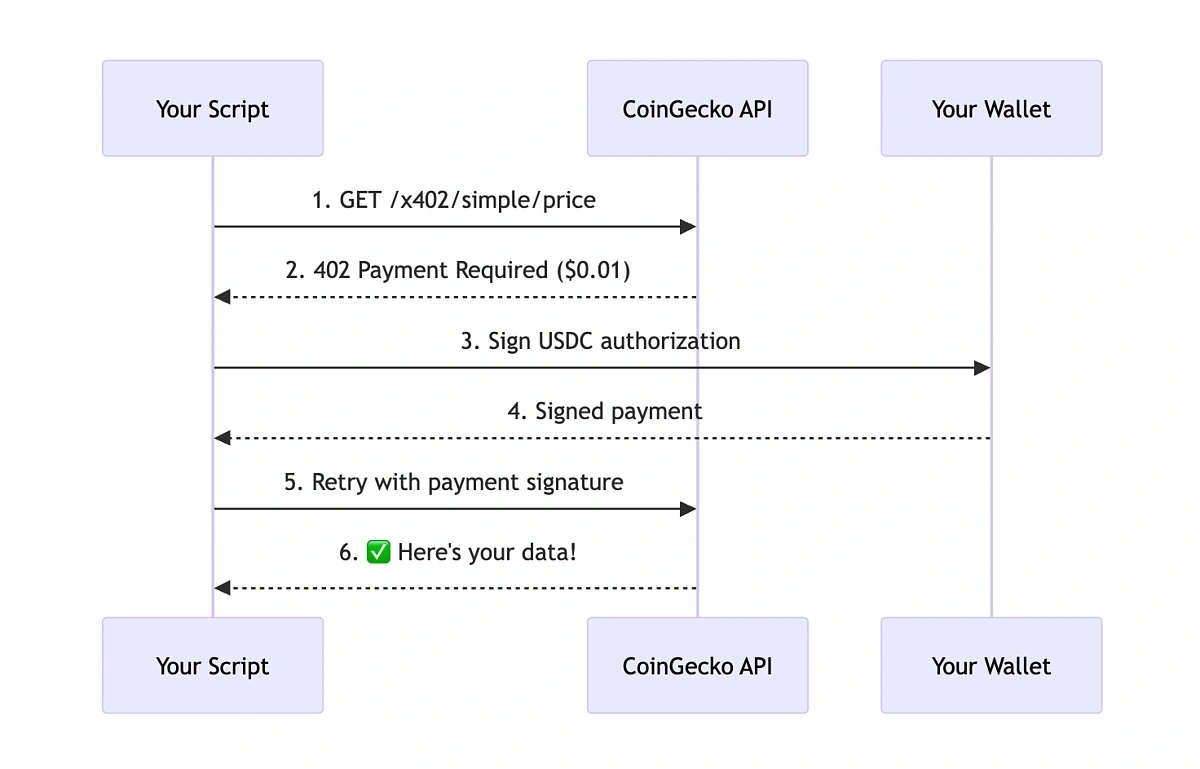
The x402 protocol redefines how AI agents interact with data services by replacing traditional API keys with a standardized HTTP payment flow. Under this model, a server returns a 402 Payment Required status code when it detects a request lacking payment credentials. This response isn't a generic error; it contains specific payment instructions, including the required token amount and the destination wallet address, allowing the agent to settle the fee and retry the request automatically.
This mechanism removes the friction of account creation and subscription management. For developers building agentic workflows, x402 enables stateless interactions where the agent pays only for the specific data it retrieves, such as a single chain analytics query. The server validates the on-chain transaction before granting access, ensuring that payment and authorization are handled in a single, atomic step.
By tying access directly to on-chain transactions, x402 creates a transparent billing layer for chain analytics. Agents can execute high-volume data requests without maintaining complex API key rotations or credit card on file. This approach aligns costs directly with usage, making it easier for fintech applications to integrate real-time blockchain data without the overhead of traditional SaaS billing infrastructures.
Top chain analytics endpoints using x402
The x402 standard is moving from theory to production, with major infrastructure providers integrating it directly into their API gateways. This shift allows developers and AI agents to access on-chain data without the friction of traditional API keys or subscription management. Instead of pre-paying for unused capacity, these endpoints handle micropayments automatically, aligning cost directly with usage.
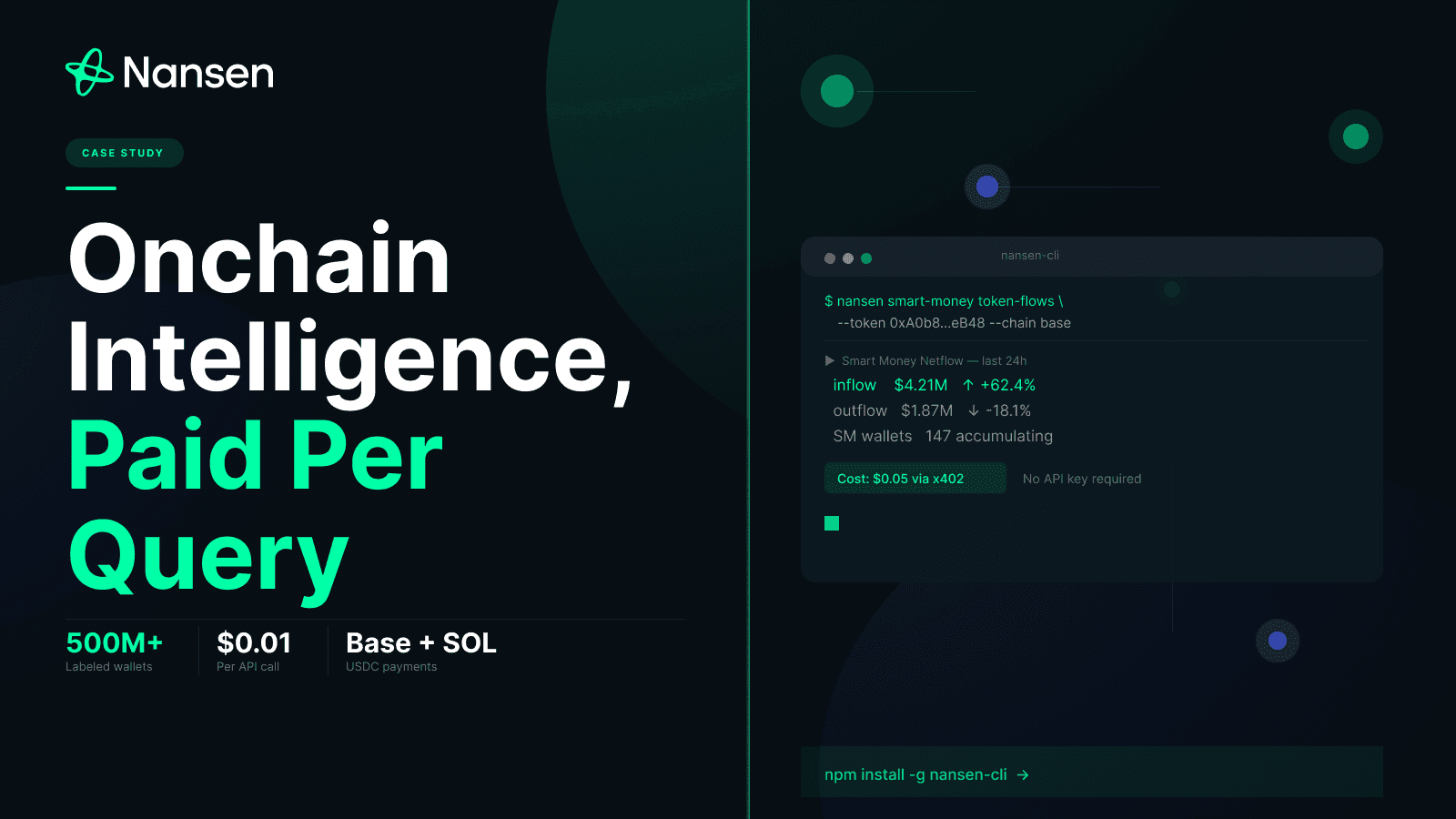
Nansen: On-Chain Intelligence for AI Agents
Nansen has integrated x402 to monetize its proprietary blockchain analytics platform. This integration is particularly significant for the agentic web, as it allows AI agents to query wallet labels, token flows, and smart contract interactions programmatically. The system enables "pay-per-intelligence" workflows, where an agent can verify a wallet's history or track a specific token movement in real-time, settling the fee instantly via the x402 protocol.
This approach removes the need for manual API key rotation or credit card onboarding for automated workflows. Developers can embed Nansen’s analytics directly into their applications, knowing that every query is paid for and logged. The result is a more scalable data layer for AI-driven trading bots and portfolio trackers.
Bitquery: Real-Time Payment Analytics
Bitquery offers a comprehensive x402-enabled data API that focuses on transaction monitoring and server activity. Their documentation highlights how developers can access payment transactions and analyze payment analytics in real-time. By leveraging x402, Bitquery allows clients to query complex blockchain data without upfront commitments, making it easier to test integrations before scaling up.
The x402 integration simplifies the developer experience by handling the payment logic at the protocol level. This is especially useful for applications that need to monitor high-volume transaction streams or audit server activity, as costs are incurred only when data is actually retrieved and processed.
QuickNode: Frictionless Blockchain Infrastructure
QuickNode, a leading blockchain node provider, has enabled x402 payments across its endpoints. This allows users to access blockchain infrastructure without creating an account, generating an API key, or managing a subscription. The process is streamlined: you send a request, the x402 protocol handles the payment, and you receive the node response.
This model is ideal for developers who want to experiment with different chains or scale their node usage dynamically. By removing the administrative overhead of account management, QuickNode makes it easier to integrate blockchain data into applications that require high availability and low latency.
Comparison of x402-Enabled Analytics Providers
The table below summarizes how these three providers leverage x402 to serve different segments of the blockchain developer community.
| Provider | Primary Focus | Target User | x402 Integration |
|---|---|---|---|
| Nansen | On-chain intelligence & wallet labels | AI agents & developers | Monetizes analytics queries for automated workflows |
| Bitquery | Transaction monitoring & payment analytics | Data analysts & developers | Pay-per-query for real-time data streams |
| QuickNode | Blockchain node infrastructure | Developers & DApp builders | No-key, pay-per-request node access |
Integrating x402 with your analytics API
To turn your analytics endpoints into revenue-generating assets, you need to bridge standard HTTP requests with on-chain settlement. The x402 standard handles this by requiring a signed Authorization header that proves payment has occurred. For sellers, the implementation revolves around two main choices: using a facilitator to handle the heavy lifting or building a custom middleware layer, and selecting the right payment scheme for your data pricing.
Step 1: Choose Your Facilitator
Most developers integrate with a facilitator like Thirdweb’s x402 facilitator or Coinbase’s CDP. These services act as the middleman that verifies the x402-payment header and forwards the clean request to your backend. This removes the need for you to manage private keys or verify signatures directly. You simply configure your facilitator URL and let it handle the crypto-to-API handshake.
Install the facilitator SDK for your framework (e.g., Next.js or Express). Configure the middleware to listen for the x402-payment header. The facilitator will validate the signature against the blockchain and attach a payment-verified flag to your request context before it reaches your analytics logic.
You must decide how your analytics data is priced. Exact payment requires the buyer to send the precise amount specified in the x-amount header. This is ideal for fixed-cost reports. Upto payment allows the buyer to send more than the required amount, which is useful for tip-based models or when the exact cost of compute is variable.
Update your API routes to check for the facilitator’s verification flag. If the flag is present, process the query and return the analytics data. If not, return a 402 Payment Required status with the necessary x-amount and x-payment-address headers so the buyer knows what to pay.
Use a testnet environment to verify the flow. Send a request with a valid payment signature using USDC or ETH. Confirm that your analytics API returns the data only after the facilitator confirms the transaction. Monitor the transaction on-chain to ensure the funds reach your designated wallet.
Step 2: Handle Payment Verification
When a buyer sends a request, your API (or facilitator) must verify that the x402-payment header contains a valid signature from a wallet that has transferred the required amount to your address. The facilitator typically handles this by checking the blockchain state. If the payment is valid, the facilitator strips the sensitive crypto headers and passes the clean request to your analytics engine.
Step 3: Manage Currency Risk
Since you are accepting crypto, consider using stablecoins like USDC for analytics APIs to avoid volatility. If you accept ETH, you might want to use a facilitator that automatically swaps the payment into a stablecoin or settles in your preferred currency. This ensures that the value of your data remains consistent regardless of market fluctuations.
Step 4: Implement Error Handling
Not all requests will succeed. Implement robust error handling for failed payments, expired signatures, or insufficient funds. Return clear 402 responses with instructions on how to pay. This improves the developer experience for buyers and reduces support tickets.
Market impact on agent-commerce infrastructure
The shift toward autonomous agent commerce is no longer theoretical. AI agents are moving from experimental prototypes to active participants in the digital economy, requiring infrastructure that supports high-volume, low-latency transactions. Traditional payment gateways, designed for human-led checkout flows, struggle with the micro-transaction nature of agent-to-agent interactions. x402 addresses this gap by enabling keyless, programmatic payments directly within API responses, allowing agents to pay for data queries without manual intervention or complex wallet management.
This architectural shift reduces friction significantly. By embedding payment logic into the HTTP response itself, developers can create scalable endpoints where the cost of a query is settled instantly. This is particularly critical for chain analytics APIs, where data freshness and volume are paramount. Agents can now autonomously purchase real-time blockchain data, paying only for the exact information they need, when they need it.
The economic model for these interactions often relies on stablecoins to avoid volatility during micro-transactions. USDC, for example, has become the standard for these flows, providing price stability for both the data provider and the consuming agent. This stability ensures that the cost of a query remains predictable, a requirement for any automated system operating at scale.
To understand the economic context of these transactions, it is helpful to observe the stability and liquidity of the underlying assets. The following widget shows the current market status of USDC, the primary currency for x402-based agent commerce.
Implementation checklist for sellers
Getting x402 endpoints running requires a few specific steps to ensure your API can accept payments from AI agents and clients. This checklist covers the essentials for sellers integrating the standard, based on official documentation from Coinbase.
Add the x402 middleware library to your project. This package handles the parsing of payment headers and the validation of transaction proofs.

Configure your API routes to use the x402 middleware. This ensures every request is checked for valid payment proofs before processing sensitive data or services.
Set up your facilitator URLs to handle payment routing. This allows AI agents to find the correct payment endpoints and ensures smooth transaction flow.
Run end-to-end tests using testnet environments. Verify that your API correctly rejects unpaid requests and accepts valid x402 proofs.
For detailed technical instructions, refer to the Quickstart for Sellers guide from Coinbase Developer Documentation.
No comments yet. Be the first to share your thoughts!